




What's Happening?
Montana State University's College of Agriculture is reinstating its Steer-A-Year program for the 2026-27 academic year. The program, housed within the Department of Animal and Range Sciences, is actively seeking donations of young cattle and feed. This
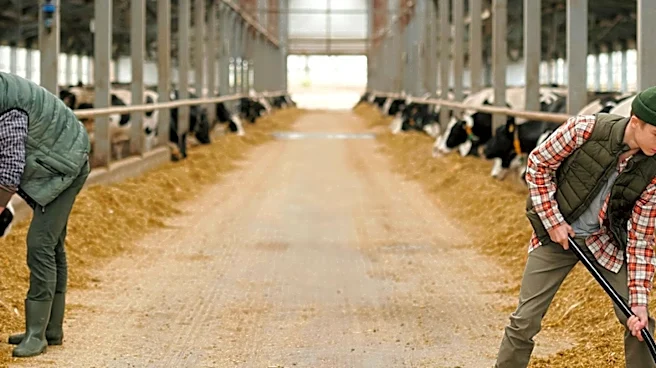
initiative provides students with practical, hands-on experience in cattle raising, covering aspects such as feeding, health checks, steer management, and data collection on feed efficiency and weight gain. Students also engage in livestock marketing studies. The donated steers are housed at the Bozeman Agricultural Research and Teaching Farm, and upon completion of the academic year, they are sold to MSU Culinary Services. This arrangement ensures that locally raised beef is supplied to the university's dining halls, Miller and Rendezvous, aligning with MSU's commitment to utilizing local ingredients. Proceeds from the sales directly support student activities, including travel and other costs for student teams and clubs within the College of Agriculture. The program also facilitates networking opportunities for students with commodity groups and industry professionals.
Why It's Important?
The Steer-A-Year program holds significant importance for several stakeholders. For students, it offers invaluable hands-on learning that bridges classroom theory with practical application, preparing them for careers in agriculture and beef production. This direct experience in animal husbandry, data analysis, and livestock marketing is crucial for developing skilled agriculturalists. For cattle producers, participating in the program allows them to support agricultural education and gain valuable data on their cattle, such as individual feed intake, animal performance, and DNA records, which they might not otherwise obtain. This data can inform breeding and management decisions, potentially improving herd efficiency. Furthermore, the program benefits the university and the local community by supplying locally sourced beef to campus dining halls, promoting sustainable food systems, and strengthening the connection between the university and agricultural producers. It also fosters a pipeline of future agricultural leaders and contributes to the economic vitality of the region's agricultural sector.
What's Next?
The immediate next step for the Steer-A-Year program is to secure donations of young cattle and feed for the upcoming 2026-27 academic year. Producers interested in donating steers or feed, or providing financial support, are encouraged to contact program adviser Hannah DelCurto-Wyffels. Calves should meet specific criteria, including being weaned, castrated, and dehorned, with an approximate weight range of 500 to 800 pounds. The ideal pickup period for these calves is late October and early November. As the program progresses, students will begin their year-long engagement with the cattle, meticulously collecting data and applying their academic knowledge. At the end of the academic year, the cattle will be sold to MSU Culinary Services, continuing the cycle of providing local beef to the university. The program will also continue to host annual awards for producers based on various performance metrics of the steers, further incentivizing participation and excellence.
Beyond the Headlines
Beyond its immediate educational and agricultural benefits, the Steer-A-Year program embodies a broader commitment to sustainable food systems and community engagement. By integrating local agricultural production with university dining services, it creates a closed-loop system that reduces food miles and supports regional economies. This model can serve as a blueprint for other institutions looking to enhance their local sourcing initiatives and provide students with practical, real-world experience. Ethically, the program promotes responsible animal husbandry practices, as students are directly involved in the care and well-being of the animals. It also highlights the importance of collaboration between academic institutions and industry, fostering a symbiotic relationship where both benefit from shared resources and knowledge. The program's emphasis on data collection and analysis also contributes to the advancement of agricultural science, providing valuable insights into feed efficiency and animal performance that can benefit the wider beef industry.