






What's Happening?
CNET has released its top picks for outdoor home security cameras in 2026, based on extensive testing under various conditions. The Arlo Pro 6 wireless security camera is recommended as the best overall, praised for its 2K resolution, 160-degree field
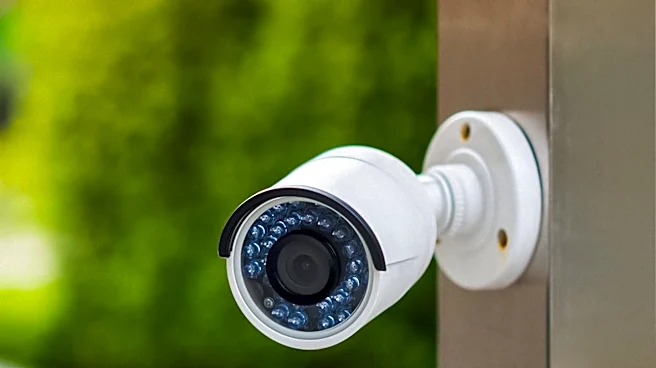
of view, integrated spotlight, and long battery life, despite requiring a subscription for advanced AI features. For budget-conscious consumers, the TP-Link Tapo C500 is highlighted for its pan/tilt functionality and free AI detection at a lower price point. The Arlo Go 2 is noted for its LTE connectivity, making it suitable for locations without Wi-Fi. The Ring Spotlight Cam 2026 is recognized for its compact design, bright LEDs, and color night vision, while the Blink Outdoor 2K Plus stands out for its exceptional battery life, rated for up to two years. The Google Nest Indoor/Outdoor Cam (2nd-gen) is favored for its free AI detection and cloud storage, and the Eufy SoloCam E30 with an integrated solar panel is recommended for those seeking a subscription-free option with continuous charging. The Lorex 2K Floodlight Camera is also listed as a strong non-subscription choice with person and vehicle detection.
Why It's Important?
The selection of outdoor home security cameras is critical for U.S. homeowners seeking to protect their properties from theft and enhance overall safety. CNET's comprehensive review provides valuable guidance in a crowded market, helping consumers make informed decisions based on factors like resolution, field of view, power source, lighting, and subscription requirements. The emphasis on features like AI detection for people and vehicles, long battery life, and weather resistance directly addresses common homeowner concerns regarding false alarms, maintenance, and durability. The availability of both subscription-based and subscription-free options caters to diverse financial preferences, impacting household budgets and long-term security costs. This detailed analysis helps consumers choose systems that best fit their specific needs, whether it's for urban residences, rural properties, or areas with limited connectivity, ultimately contributing to more secure communities.
What's Next?
The home security camera market is expected to continue its rapid evolution, with CNET noting trends toward higher resolutions (2K becoming the norm, with 4K increasing), more pan/tilt options, and advanced AI capabilities. Future cameras are likely to offer more sophisticated AI detection, including text summaries of video clips, facial recognition, and broader object detection beyond just people and packages. This ongoing innovation will provide consumers with more powerful and intelligent tools for home surveillance. However, it will also necessitate continuous evaluation of privacy implications and data security. Manufacturers will likely focus on improving battery efficiency, integrating more seamlessly with smart home ecosystems, and offering flexible storage solutions to meet diverse consumer demands. The competition among brands like Arlo, Ring, Blink, Google Nest, Eufy, and Lorex will drive further advancements in features and affordability.
Beyond the Headlines
The advancements in outdoor home security cameras, particularly in AI detection and resolution, signify a broader shift towards proactive and intelligent surveillance. This technology not only deters crime but also provides crucial evidence when incidents occur. However, the increasing sophistication of these cameras, especially with features like facial recognition and detailed object detection, raises significant ethical and privacy concerns. The balance between enhanced security and individual privacy rights becomes a central issue, particularly regarding data storage, access by law enforcement, and potential misuse of recorded footage. The debate over subscription models versus local storage also highlights consumer preferences for control over their data and avoidance of recurring costs. As these devices become more integrated into daily life, public discourse around smart surveillance, data governance, and the 'right to be unobserved' will intensify, shaping future regulations and consumer expectations.