





What's Happening?
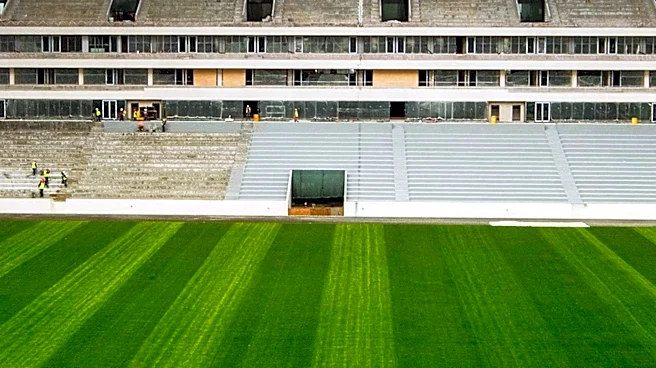
El Salvador's President Nayib Bukele announced that the construction of the new National Stadium has reached 75% completion. The stadium, a project developed through cooperation with the People's Republic of China, is projected to be the largest and most
modern in Central America. Located in Antiguo Cuscatlán, it will have a seating capacity of 50,000 spectators, surpassing other major sports venues in the region, including those in Costa Rica, Honduras, Panama, and Guatemala. The construction is being managed by China State Construction Engineering Corporation (CSCEC) and will cover approximately 57,500 square meters, featuring exclusive zones for various events. Images of the ongoing construction were shared by President Bukele on his official X account. The project is currently preparing for the installation of equipment, seats, and finishes. The ambassador of China in El Salvador, Zhang Yanhui, confirmed that the 50,000 seats are expected to arrive at the port of Acajutla on October 11, with installation scheduled to begin in the last weeks of October. The original contract sets July 2027 as the deadline for the stadium's completion.
Why It's Important?
The construction of El Salvador's new National Stadium signifies a significant investment in the country's infrastructure and its potential to host major international events. By becoming the largest and most modern stadium in Central America, it could elevate El Salvador's profile as a destination for sports competitions, concerts, and other large-scale gatherings. This development could attract tourism and generate economic activity, benefiting local businesses and creating employment opportunities. The project, a result of cooperation with China, also highlights the growing influence of Chinese investment in Latin American infrastructure. For the U.S., this could represent a shift in regional dynamics, as other nations strengthen ties with China through such large-scale development projects. The increased capacity and modern facilities could also foster national pride and provide a state-of-the-art venue for Salvadoran athletes and cultural events, potentially boosting the country's sports and entertainment industries.
What's Next?
The immediate next steps involve the arrival and installation of the 50,000 seats, expected to commence in the latter half of October. To expedite this process, the number of workers on site, currently comprising nearly 300 Chinese and 600 Salvadoran personnel, will be increased. While President Bukele has confirmed the 75% completion rate, an official inauguration date has not yet been announced. However, the original contract stipulates July 2027 as the deadline for the project's delivery. Following completion, the stadium is expected to host a variety of events, including sports competitions, international matches, and mass spectacles. The successful completion and operation of this stadium could pave the way for El Salvador to bid for and host more prominent regional and international events, further solidifying its position as a key player in Central American sports and entertainment.
Beyond the Headlines
Beyond its immediate function as a sports venue, the new National Stadium in El Salvador carries broader implications for regional development and international relations. The significant investment and the involvement of China in its construction underscore a trend of increasing Chinese engagement in Latin America, potentially reshaping geopolitical and economic landscapes. This project could serve as a model for future infrastructure collaborations between China and other Central American nations. Furthermore, the stadium's modern design and large capacity could foster a sense of national identity and pride among Salvadorans, providing a central hub for community gatherings and cultural celebrations. The long-term impact could include enhanced regional tourism, increased foreign investment, and a boost to El Salvador's soft power through its ability to host world-class events. The project also highlights the strategic importance of infrastructure development in national growth and international standing.