







What's Happening?
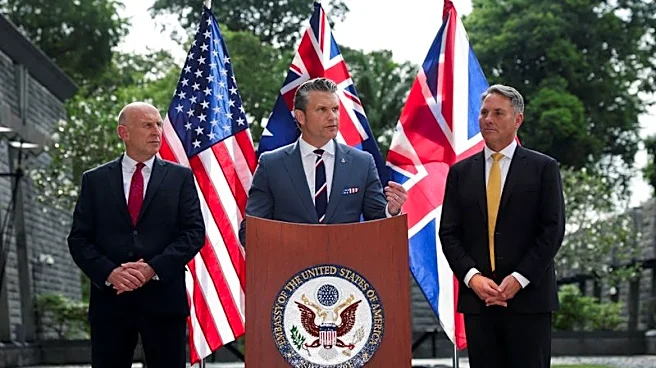
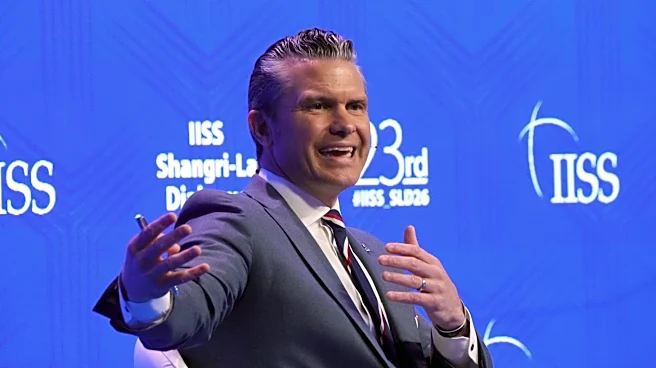
At the Shangri-La Dialogue in Singapore, American allies emphasized the importance of unity in addressing global threats. U.S. Defense Secretary Pete Hegseth criticized European allies for insufficient defense spending, while Japanese Defense Minister
Shinjiro Koizumi highlighted the need for strong coalitions to deter potential adversaries. The conference underscored the necessity of a rules-based international order, with Australian Defense Minister Richard Marles and Netherlands Defense Minister Dilan Yesilgöz-Zegerius advocating for collective responses to global conflicts. The discussions also touched on the evolving military dynamics in the Indo-Pacific region, particularly concerning China's military expansion.
Why It's Important?
The emphasis on unity and collective defense strategies reflects growing concerns over regional and global security threats. The call for increased defense spending and stronger alliances is significant as it addresses the challenges posed by nations like China and Russia. The discussions highlight the interconnected nature of modern security threats, where regional conflicts can have global implications. This focus on unity and defense spending could lead to policy shifts among U.S. allies, potentially impacting international relations and defense strategies.
What's Next?
The conference may prompt U.S. allies to reassess their defense budgets and strategies, potentially leading to increased military spending and stronger international coalitions. The dialogue between the U.S. and China, as well as the evolving defense policies in the Indo-Pacific, will likely continue to shape global security dynamics. Future engagements and agreements among allies could further solidify a unified approach to addressing shared threats.
Beyond the Headlines
The discussions at the conference also raise questions about the balance between military power and diplomatic efforts in maintaining global stability. The emphasis on a rules-based order suggests a commitment to international law, but also highlights the challenges of enforcing such rules without adequate military backing. The evolving geopolitical landscape may lead to shifts in traditional alliances and the emergence of new security frameworks.