



What's Happening?
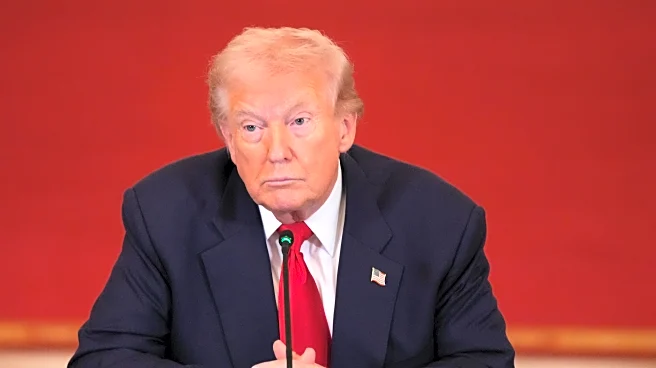
President Donald Trump has called on Latin American leaders to employ military force against drug trafficking cartels and transnational gangs, which he describes as a significant threat to national security in the Western Hemisphere. This appeal was made
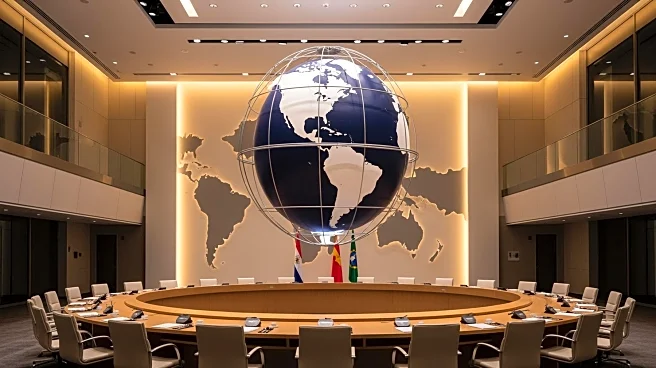
during the 'Shield of the Americas' summit held at Trump National Doral Miami. Trump emphasized the necessity of military intervention, drawing parallels to the U.S.-led coalition against the Islamic State in the Middle East. The summit, attended by leaders from countries such as Argentina, Bolivia, and El Salvador, aims to reinforce U.S. foreign policy focus on the region amidst global crises. The event also highlighted Trump's commitment to countering Chinese influence in Latin America, as he seeks to reassert U.S. dominance in the area.
Why It's Important?
The call for military action against cartels underscores a significant shift in U.S. foreign policy towards a more aggressive stance in Latin America. This move could potentially alter the dynamics of regional security and U.S. relations with Latin American countries. By encouraging military intervention, the U.S. aims to curb the influence of drug cartels, which have long been a destabilizing force in the region. Additionally, Trump's focus on countering Chinese economic influence highlights the geopolitical competition in Latin America. The outcome of these initiatives could impact trade, security, and diplomatic relations, affecting both regional stability and U.S. strategic interests.
What's Next?
Following the summit, the U.S. is expected to announce a significant agreement on combating drug trafficking across the Western Hemisphere. This could involve increased military cooperation and intelligence sharing among the participating countries. The U.S. may also intensify its efforts to limit Chinese economic activities in the region, potentially leading to diplomatic tensions. The success of these initiatives will depend on the willingness of Latin American countries to align with U.S. policies and the effectiveness of military strategies in dismantling cartel operations.
Beyond the Headlines
The proposed military actions raise ethical and legal questions regarding sovereignty and the use of force in foreign territories. There is also the risk of escalating violence and human rights concerns if military interventions are not carefully managed. Furthermore, the focus on military solutions may overshadow the need for comprehensive strategies addressing the root causes of drug trafficking, such as poverty and corruption. The long-term implications of these policies could redefine U.S.-Latin American relations and influence the region's approach to international partnerships.