









What's Happening?
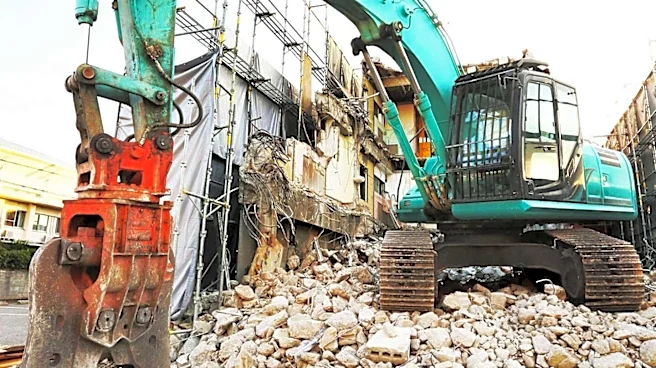
The historic Twin Chimneys Motor Court in Cheyenne, a landmark on the Lincoln Highway for nearly 90 years, has been demolished to make way for a new 7 Brew Coffee shop. The distinctive twin stone chimneys, which gave the motel its name, were the last
part of the structure to be taken down. Megan Stanfill, executive director of the Alliance for Historic Wyoming, expressed regret over the demolition, noting that conversations about preserving or adaptively reusing such buildings often occur too late. The motel, built in the 1930s, featured a red exterior, green roof, and knotty pine interior, serving travelers for decades by offering lodging with covered parking. The demolition was carried out by McCarty & Sons, a Denver company that specializes in demolishing old buildings and constructing 7 Brew Coffee shops in the region. The new coffee shop will be the second 7 Brew Coffee location in Cheyenne.
Why It's Important?
The demolition of the Twin Chimneys Motor Court highlights the ongoing tension between urban development and historic preservation in U.S. cities. While the property owner has the right to develop their land, the loss of such a long-standing landmark erases a piece of Cheyenne's architectural and cultural history. This event underscores the challenges faced by preservationists who often struggle to intervene before demolition plans are finalized. The motel was part of a network of motor courts along U.S. Highway 30, which played a significant role in early American road travel. Its removal signifies a shift in the urban landscape, replacing a piece of the past with modern commercial development. This trend can lead to a loss of unique local character, as historic structures are replaced by chain businesses, impacting the distinctiveness of communities.
Beyond the Headlines
The demolition of the Twin Chimneys Motor Court reflects a broader national trend where historic roadside architecture, particularly motels and motor courts from the early to mid-20th century, are increasingly vulnerable to redevelopment. These structures, while not always officially designated as historic, represent a significant era in American travel and culture. Preservation advocates often point to the potential for adaptive reuse, where old buildings are repurposed for new functions while retaining their historical integrity, as a sustainable alternative to demolition. The incident in Cheyenne could serve as a catalyst for increased awareness and proactive measures to identify and protect similar historic properties along routes like the Lincoln Highway. It also raises questions about the balance between property rights, economic development, and the collective value of preserving cultural heritage for future generations, prompting communities to consider how they value and protect their unique historical assets.