
What's Happening?
Ukraine's Odessa region is experiencing severe disruptions as Russian forces intensify their attacks on critical infrastructure. The region, which is a vital hub for Ukraine's agricultural exports, has
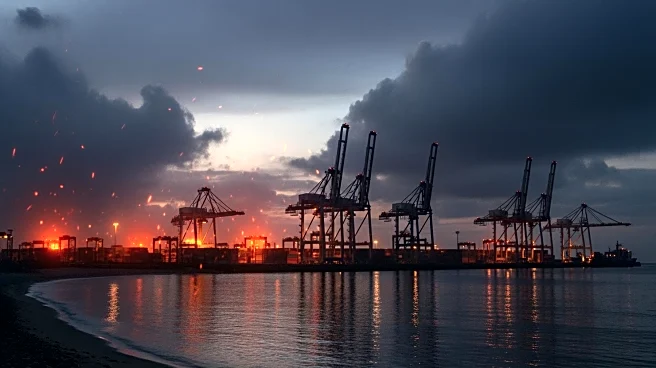
been targeted by Russian strikes that have severely impacted its power grid and transportation networks. According to the Ministry for Development of Communities and Territories of Ukraine, approximately 90% of Ukraine's agricultural produce is exported by sea, with six ports in the Odessa region handling about 76 million tons of cargo over 11 months in 2025. The ongoing conflict has left Odessa's residents without light, heat, and running water as winter temperatures drop. The Ukrainian state railway authority reports that attacks on the rail network have caused $5.8 billion in damages, with over 1,100 attacks recorded in 2025 alone. The situation is compounded by a shortage of Ukrainian troops, as Russian forces continue to advance in the southern regions.
Why It's Important?
The escalation of attacks on Odessa's infrastructure has significant implications for Ukraine's economy and its ability to sustain its agricultural exports, which are crucial for the country's economic stability. The disruption of power and transportation networks not only affects the local population but also poses a threat to Ukraine's overall economic resilience. The strategic targeting of Odessa by Russian forces highlights the vulnerability of Ukraine's critical infrastructure and the challenges faced in maintaining supply routes. The ongoing conflict and the resulting humanitarian crisis underscore the urgent need for diplomatic solutions to prevent further deterioration of the situation. The international community's response and support will be crucial in addressing the humanitarian needs and stabilizing the region.
What's Next?
As the conflict continues, Ukraine may need to seek alternative routes for its exports, potentially increasing reliance on rail transport despite the damages. The Ukrainian government is likely to intensify diplomatic efforts to garner international support and pressure Russia to cease its attacks. The situation may also prompt further military and humanitarian assistance from Western allies. The potential for further escalation remains high, with the risk of additional infrastructure damage and civilian casualties. Monitoring the developments in Odessa and the broader region will be critical in assessing the conflict's trajectory and the international community's response.
Beyond the Headlines
The ongoing conflict in Odessa highlights the broader geopolitical tensions between Ukraine and Russia, with significant implications for regional stability. The attacks on infrastructure not only disrupt daily life but also serve as a strategic move to weaken Ukraine's economic capabilities. The situation raises ethical concerns about the targeting of civilian infrastructure and the humanitarian impact on the local population. Long-term, the conflict may lead to shifts in regional alliances and influence the global geopolitical landscape. The resilience of Ukraine's infrastructure and its ability to recover will be a key factor in the country's future stability and development.