







What's Happening?
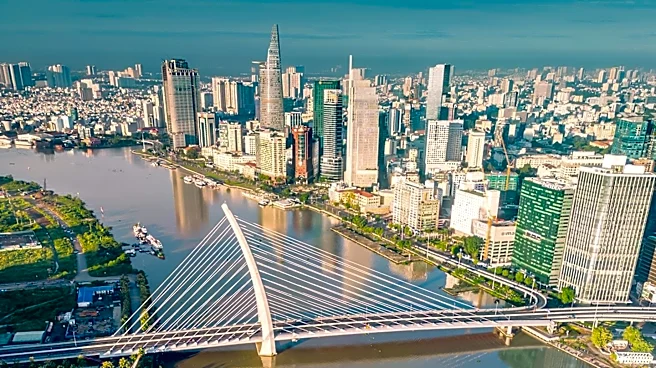
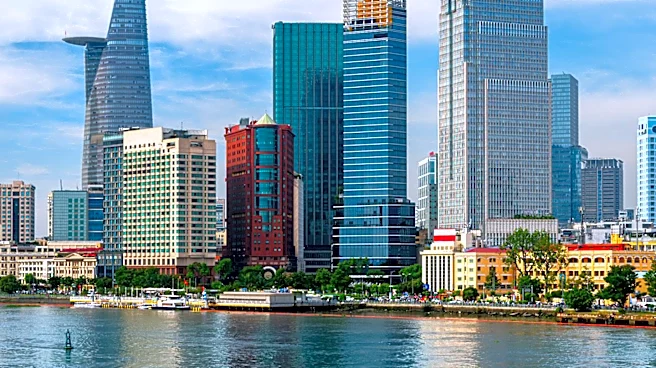
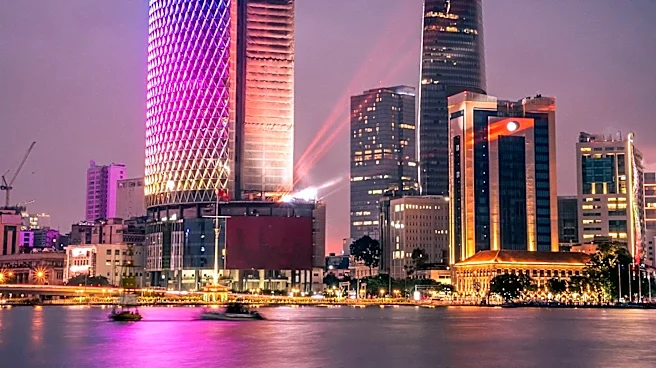
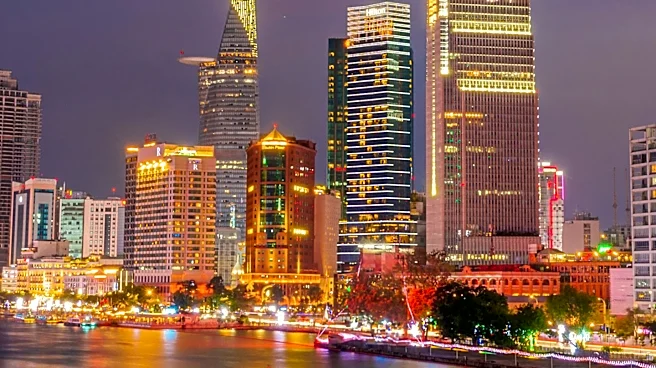
Vietnam is advancing its plans to establish International Financial Centers (IFCs) in Ho Chi Minh City and Da Nang. These centers aim to connect global capital with Vietnam's real economy, deepen domestic financial markets, and support the country's transition
to an innovation-driven economy. At the Vietnam Financial Forum 2026, experts emphasized the need for Vietnam to build the necessary legal, regulatory, and financial infrastructure to mobilize and allocate capital effectively. The IFCs are envisioned as platforms for financial activity, focusing on institutions rather than infrastructure, and are expected to be green, smart, innovative, and inclusive.
Why It's Important?
The establishment of IFCs in Vietnam is crucial for the country's economic development as it seeks to achieve high-income status by 2045. With a declining working-age population and high workforce participation, Vietnam's growth will depend on improving productivity. The IFCs are expected to address a projected $200 billion financing gap by providing deeper capital markets and larger institutional pools of capital. This initiative will not only attract foreign investment but also support complex projects requiring long-term capital, thereby sustaining Vietnam's economic growth.
What's Next?
The development of Vietnam's IFCs will be a phased process, with 2025 marked as the year of design for establishing the legal framework. The focus will then shift to building the organization, recruiting personnel, and developing the regulatory framework. The first wave of regulations will cover operational licensing, banking, asset management, and more. The dual-center strategy, with Ho Chi Minh City and Da Nang playing complementary roles, aims to create a financial ecosystem capable of mobilizing global capital and supporting Vietnam's long-term economic transformation.