



What's Happening?
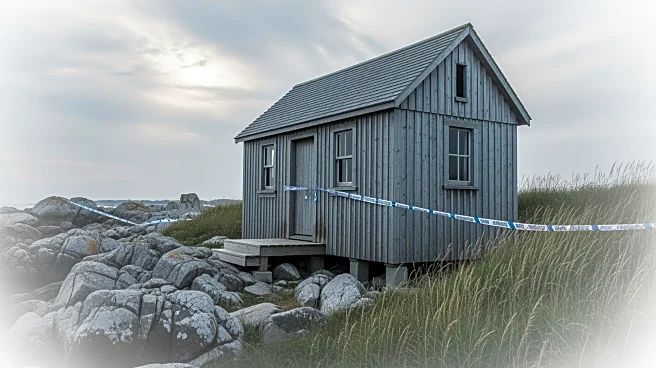
The South Georgia Heritage Trust is undertaking a significant preservation project on a South Atlantic island to save a key historical site associated with polar explorer Ernest Shackleton. The Stromness Manager's Villa, used by Shackleton during his famous
1916 rescue mission, is in a state of disrepair. The Trust has raised over £3 million to stabilize the structure, which is located in a hazardous area filled with asbestos and debris. The building, originally a flat-pack house from Norway, is being preserved to maintain its historical significance. Plans include creating a digital 'twin' of the villa to allow global access to this piece of history.
Why It's Important?
This preservation effort is crucial for maintaining the legacy of Ernest Shackleton, whose story of survival and leadership continues to inspire people worldwide. By stabilizing the villa and creating a digital version, the Trust ensures that Shackleton's story remains accessible to future generations. This project highlights the importance of preserving historical sites that are not easily accessible to the public, ensuring that heritage is not limited to those who can physically visit such locations. The digital twin will allow people globally to experience a significant chapter in the history of exploration.
What's Next?
In the coming weeks, digital specialists will visit South Georgia to scan the villa, capturing details necessary for creating a virtual experience. This digital version will be available on the Trust's website, potentially allowing users to virtually walk through the villa as it was in 1916. The project aims to democratize access to historical experiences, making Shackleton's story available to a broader audience. The Trust's efforts may inspire similar preservation projects for other historical sites worldwide.
Beyond the Headlines
The project raises questions about the role of digital technology in heritage preservation. By creating virtual experiences, organizations can overcome physical and financial barriers to accessing historical sites. This approach could revolutionize how people engage with history, offering immersive experiences that traditional methods cannot provide. It also prompts discussions on the ethical considerations of digital preservation, such as ensuring accuracy and authenticity in virtual representations.