
What's Happening?
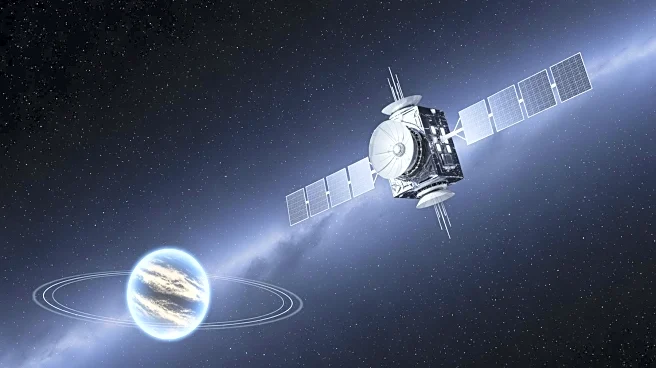
NASA's Pandora small satellite was successfully launched aboard a SpaceX Falcon 9 rocket from Vandenberg Space Force Base on January 11, 2026. The satellite is part of a mission to study the atmospheres
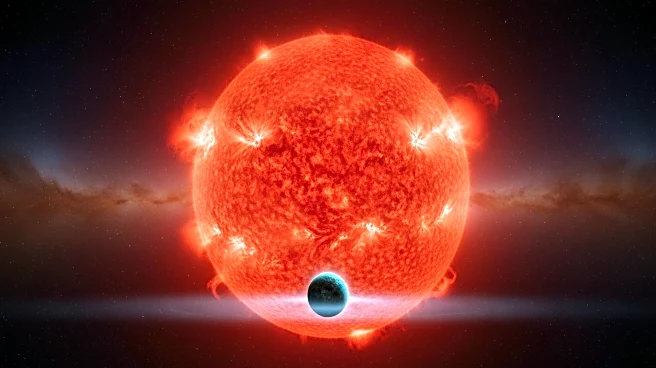
of at least 20 known exoplanets, focusing on detecting hazes, clouds, and water. This mission aims to enhance understanding of planetary atmospheres beyond our solar system. The launch also included the Star-Planet Activity Research CubeSat (SPARCS) and the Black Hole Coded Aperture Telescope (BlackCAT) CubeSat, all encapsulated within the Falcon 9 payload fairing.
Why It's Important?
The launch of Pandora is significant for the field of astronomy and planetary science, as it will provide valuable data on the atmospheric conditions of distant planets. This information is crucial for assessing the potential habitability of these exoplanets and understanding the diversity of planetary systems. The mission supports NASA's broader goals of exploring the universe and seeking signs of life beyond Earth. The collaboration with SpaceX also highlights the growing role of private companies in advancing space exploration.
What's Next?
Following its deployment, Pandora will begin its year-long mission to observe and analyze the atmospheres of selected exoplanets. The data collected will be used by scientists to refine models of planetary atmospheres and improve predictions about their composition and behavior. The mission's findings could influence future exoplanet exploration strategies and inform the design of subsequent space missions aimed at discovering habitable worlds.