
What's Happening?
Canadian agricultural organizations, including Grain Farmers of Ontario and several producer and industry groups, are urging the government to establish a national plant breeding strategy. They are seeking
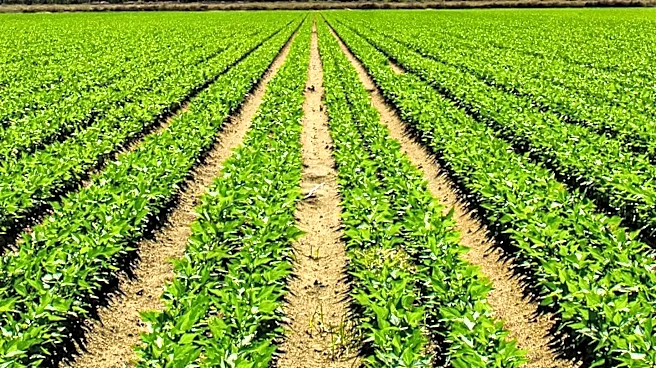
predictable, multi-year federal funding to maintain breeding capacity and advance crop development across Canada. The groups have released a joint vision titled 'A National Plant Breeding Strategy Must Work for Every Crop,' which has garnered support from various regional and crop-specific organizations. Plant breeding is considered fundamental to Canadian agriculture, as new crop varieties can take over a decade to develop from research to commercial production. These breeding programs are crucial for developing varieties with improved resistance to pests and diseases, greater tolerance to changing weather conditions, enhanced productivity and quality, and the ability to meet evolving market demands. The organizations emphasize the importance of public investment, particularly for crops with limited market size or royalty returns that may not attract sufficient private breeding investment, such as oats, food-grade soybeans, wheat, barley in Eastern Canada, Ontario-grown canola, and certain pulse crops.
Why It's Important?
This initiative is critically important for the long-term resilience and competitiveness of Canadian agriculture. Plant breeding directly impacts food security, economic stability for farmers, and the industry's ability to adapt to climate change and evolving consumer demands. For the U.S., this Canadian effort highlights a shared challenge in maintaining robust agricultural research and development, particularly in areas where private investment may be insufficient. A strong plant breeding program ensures that farmers have access to varieties that can withstand environmental stresses, reduce reliance on chemical inputs, and meet specific market needs. Without predictable funding, the capacity for innovation in crop development could diminish, leading to slower progress in addressing agricultural challenges. This could result in reduced yields, increased vulnerability to pests and diseases, and a less competitive agricultural sector, impacting both domestic food supply and export capabilities.
What's Next?
The agricultural groups plan to continue discussions with Agriculture and Agri-Food Canada and other stakeholders to develop a comprehensive national strategy. They are specifically calling for renewed multi-year federal funding before the 2028 funding framework, as current Agriculture and Agri-Food Canada-supported breeding programs are scheduled to conclude in 2028. Additionally, they advocate for the next AgriScience Program to support the entire variety-development process, especially for crops that receive limited private-sector investment. The organizations stress that predictable, long-term funding is essential for sustaining breeding capacity and facilitating the extensive testing required before new varieties become available to farmers. The goal is to ensure that Canada's diverse agricultural sector remains strong and resilient by having access to a full range of crop varieties adapted to various conditions and market needs.
Beyond the Headlines
The push for a national plant breeding strategy underscores a deeper recognition of agriculture as a long-term investment in national infrastructure and food sovereignty. It highlights the ethical responsibility of governments to support foundational research that benefits all citizens through a stable food supply and a healthy environment. The distinction between crops that attract private investment and those that require public funding points to market failures in agricultural innovation, where essential crops might be neglected due due to insufficient profit motives. This raises questions about the role of public goods in a market economy and the need for strategic government intervention to ensure broad societal benefits. Culturally, plant breeding is an ongoing dialogue between human ingenuity and natural selection, shaping the very landscape and diet of a nation. The long-term implications include enhanced food security, reduced environmental impact through more resilient crops, and sustained economic viability for farming communities, contributing to a more sustainable and adaptable agricultural future.