







What's Happening?
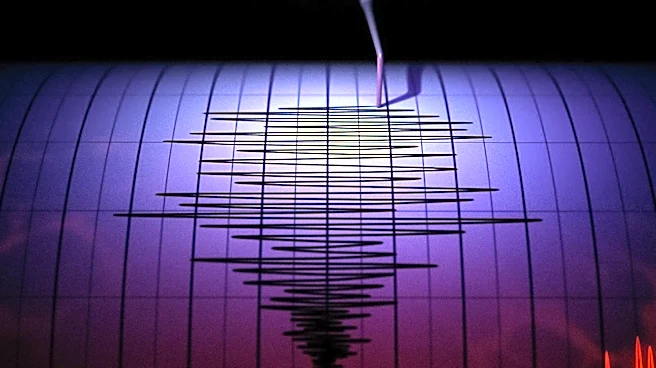
Residents in the unincorporated communities of Lennox and Westmont, California, experienced a swarm of 90 micro-earthquakes from Friday night into Saturday. The United States Geological Survey (USGS) recorded these seismic events, which ranged in magnitude
from 1.0 to 2.7. The tremors began at 8:05 p.m. Friday and continued until 2:30 p.m. Saturday. The cluster of activity was centered around the Newport-Inglewood Fault Zone, a significant strike-slip fault extending from Culver City to Newport Beach. While micro-quakes are generally not predictors of larger seismic events, the frequency and number of these tremors caused concern among local residents, with many reporting feeling the shaking across various nearby neighborhoods.
Why It's Important?
This swarm of micro-quakes is important because it highlights the persistent seismic activity along the Newport-Inglewood Fault Zone, a known active fault line in a densely populated area of Southern California. A 2017 study indicated that this fault could be more hazardous than previously understood, with historical evidence suggesting past earthquakes up to magnitude 7.5. While the USGS states that micro-quakes do not typically predict larger quakes, any activity on such a significant fault serves as a reminder of the region's seismic vulnerability. For residents, it underscores the importance of earthquake preparedness and awareness, even for smaller, more frequent tremors. The event also provides valuable data for seismologists studying fault behavior and stress accumulation in the area.
What's Next?
Seismologists will continue to monitor the Newport-Inglewood Fault Zone for any further seismic activity following this swarm of micro-quakes. While the USGS has indicated that micro-quakes are not predictors of larger events, ongoing analysis of the data collected from these tremors can contribute to a better understanding of the fault's mechanics and potential hazards. Residents in Lennox, Westmont, and surrounding areas are advised to remain prepared for earthquakes, as Southern California is a seismically active region. Local emergency services may use such events as opportunities to reinforce public awareness campaigns on earthquake safety protocols and preparedness measures.
Beyond the Headlines
Beyond the immediate seismic activity, this event subtly reinforces the ongoing scientific debate and research into earthquake prediction and fault behavior. While current science largely dismisses micro-quakes as direct precursors to major quakes, every seismic event provides data points that contribute to the complex puzzle of understanding Earth's crustal movements. The Newport-Inglewood Fault Zone's history, including evidence of ancient, powerful earthquakes, keeps it a focal point for geological study. This swarm also serves as a natural, albeit unsettling, reminder for urban planners and infrastructure developers in Southern California to continuously assess and reinforce building codes and emergency response systems against the backdrop of persistent seismic risk.