






What's Happening?
The Link satellite, developed by Katalyst Space Technologies, is facing operational challenges nearly a month after its launch. Designed to save NASA's Swift gamma-ray telescope from reentry, the satellite is experiencing issues with its attitude control,
leading to sporadic communications. Two of the satellite's three reaction wheels are non-operational, and there is a loss of functionality in its cold gas thruster system. Despite these setbacks, the satellite continues to generate sufficient power, allowing engineers time to address the problems. The mission, which began on July 3 with a launch aboard a Northrop Grumman Pegasus XL rocket, aims to attach the Link satellite to Swift and elevate its orbit using electric thrusters.
Why It's Important?
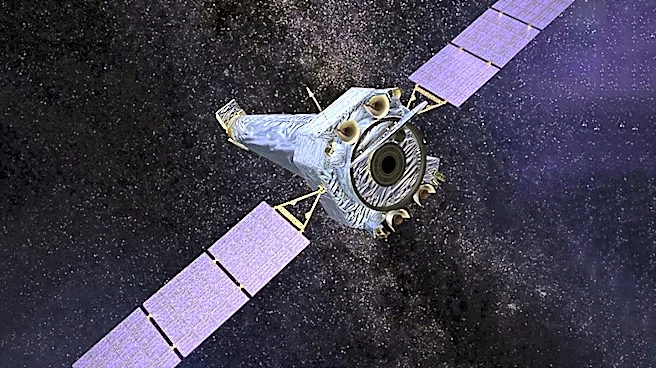
The mission is critical for extending the operational life of the Swift Observatory, which plays a key role in detecting gamma-ray bursts. The challenges faced by the Link satellite highlight the complexities of space missions and the importance of reliable technology. The outcome of this mission could impact future collaborations between NASA and private companies, influencing the development of commercial space services. The situation also emphasizes the need for robust engineering solutions and contingency plans in space exploration.
What's Next?
Engineers are working to stabilize the Link satellite using its electric thrusters, which were not originally intended for this purpose. The success of these efforts will determine whether the mission can proceed as planned. If successful, the satellite will attach to Swift and elevate its orbit, preventing reentry. The mission's outcome will be closely watched by stakeholders, as it could set a precedent for future public-private partnerships in space exploration.