




What's Happening?
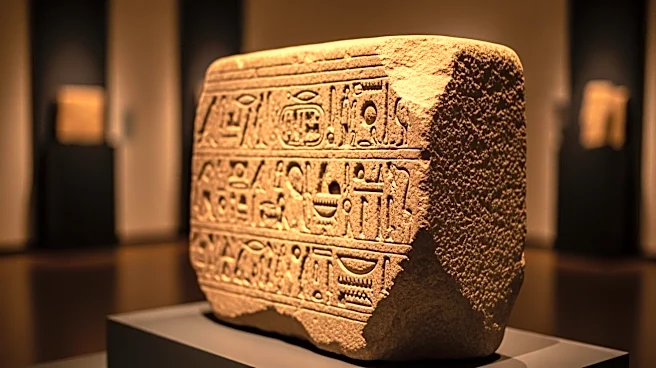
A 3,300-year-old Egyptian stele from the collection of Ben Weider, a prominent figure in the bodybuilding world, is set to be displayed at TEFAF New York. Weider, known for founding the International Federation of BodyBuilders and introducing Arnold Schwarzenegger
to the global stage, received the stele as a gift from the United Arab Republic of Bodybuilding Federation in 1964. The stele, depicting Pharaoh Thutmose IV, was sold at Iegor Auctions in Montreal for 56,000 CAD and will be offered at TEFAF by antiquity specialists David Aaron for £450,000. The stele is historically significant as it symbolizes Thutmose IV's divine authority, derived from a dream where the sun god promised him the kingdom of Egypt if he cleared the sands from the Sphinx. Accompanying the stele is a 2,500-year-old bust of an Egyptian goddess, authenticated by David Aaron after initial doubts about its authenticity.
Why It's Important?
The display of the Egyptian stele at TEFAF New York highlights the intersection of historical artifacts and modern cultural events. It underscores the importance of preserving and showcasing ancient history, offering insights into the reign of Pharaoh Thutmose IV and the cultural significance of such artifacts. The stele's presence at TEFAF also reflects the ongoing interest in ancient Egyptian history and its impact on contemporary art and antiquities markets. For collectors and historians, the stele represents a bridge between millennia, connecting ancient legitimacy claims with modern appreciation for historical artifacts. The event also emphasizes the role of private collectors like Ben Weider in preserving historical pieces and their eventual integration into public exhibitions.
What's Next?
The stele's appearance at TEFAF New York may spark increased interest in ancient Egyptian artifacts among collectors and historians. It could lead to further exploration and authentication of similar pieces, enhancing the understanding of ancient Egyptian history and its cultural legacy. The exhibition might also influence the market dynamics for antiquities, potentially increasing the value and demand for authenticated historical artifacts. As TEFAF continues to showcase such pieces, it may encourage more private collectors to bring their collections into public view, fostering greater appreciation and study of ancient cultures.
Beyond the Headlines
The stele's journey from a private collection to a public exhibition raises questions about the ethical considerations of artifact ownership and the responsibilities of collectors in preserving cultural heritage. It highlights the importance of provenance and authentication in the antiquities market, ensuring that historical artifacts are accurately represented and valued. The stele's story also reflects broader cultural narratives about the legitimacy of rulers and the role of divine authority in ancient societies, offering a lens through which to examine historical power dynamics and their relevance today.