






What's Happening?
A new report, titled 'Unlocking California’s Flexible Load: A Durable Blueprint for Affordability and Reliability,' indicates that electric vehicles (EVs), home batteries, smart thermostats, water heaters, and commercial buildings could significantly
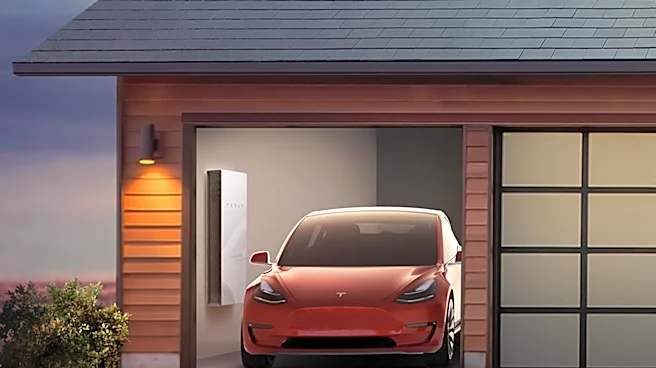
contribute to California's electricity grid management. The study, conducted by GridLab, Kevala, and Energy and Environmental Economics, estimates that if just 10% of California's projected EVs participate in vehicle-to-grid (V2G) programs by 2036, they could supply approximately 9 gigawatts (GW) of power for 12 hours. This equates to 108 gigawatt-hours (GWh) of storage, fulfilling over one-third of the state's long-duration energy storage target for that year. V2G technology enables compatible EVs to send power back to the grid during peak demand and recharge when electricity is more abundant and cheaper. The primary challenge identified is the lack of standardized program designs, payment structures, and enrollment requirements across different utility companies in California, hindering widespread participation.
Why It's Important?
This initiative is crucial for California's energy future, offering a path to manage electricity demand without solely relying on new power plants, large-scale grid batteries, or costly grid upgrades. By leveraging existing and increasingly available equipment in homes and businesses, the state can enhance grid reliability and affordability. The report emphasizes that standardizing programs and compensating participants based on verified grid performance, rather than just enrollment, would encourage broader adoption. This approach could also prevent the shifting of grid costs onto non-participating customers, a significant concern in ongoing debates over energy incentives. The potential for virtual power plants, utilizing these technologies, to meet over 15% of California's peak electricity demand and save utilities and customers $550 million annually highlights the substantial economic and environmental benefits.
What's Next?
The report advocates for the implementation of standardized program designs and common technical requirements across California's utility companies. It also recommends a payment structure that compensates participants for the measurable value their devices provide to the grid. This shift from flat-rate incentives to performance-based compensation is expected to motivate more EV owners and smart home device users to join demand flexibility programs. Policymakers and utility companies will need to collaborate to streamline these processes and create a unified statewide system that can effectively integrate and utilize these distributed energy resources. The success of these recommendations could serve as a model for other states looking to enhance grid resilience and sustainability through smart technology adoption.
Beyond the Headlines
The broader implications of this report extend beyond immediate energy management, touching upon consumer behavior, technological integration, and regulatory frameworks. The concept of 'energy democracy,' where individual consumers contribute to and benefit from grid stability, is central to this vision. It challenges traditional centralized energy models by empowering individuals and businesses to become active participants in the energy market. However, achieving this requires overcoming significant regulatory hurdles and ensuring equitable access to these technologies and programs. The ethical dimension of data privacy and security, especially with smart home devices and V2G systems, will also become increasingly important as more personal assets are integrated into the grid. This shift could fundamentally alter the relationship between consumers, utilities, and energy infrastructure, fostering a more resilient and decentralized energy ecosystem.