



What's Happening?
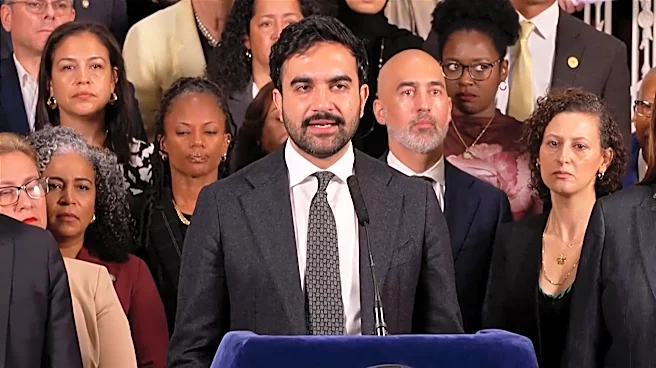
Former New York City Mayor Eric Adams had his federal security clearance revoked after becoming the first sitting mayor to face federal criminal charges in 2024. This development was noted in the context of current New York City Mayor Zohran Mamdani's
ongoing process to obtain his own federal security clearance, which has extended for over eight months. Experts indicate that the FBI background check for federal clearance can typically take up to a year for individuals beginning their first term in public office. The revocation of Adams's clearance underscores the serious implications of federal criminal charges for public officials, particularly those in high-profile positions requiring access to classified national security information. The incident serves as a precedent for the rigorous vetting and ongoing eligibility requirements for federal security clearances.
Why It's Important?
The revocation of former Mayor Eric Adams's federal security clearance is significant as it highlights the stringent standards and consequences associated with holding such clearances, especially for high-ranking public officials. Federal security clearances are essential for mayors of major cities like New York, enabling them to access classified information critical for national security, counter-terrorism efforts, and emergency preparedness. The loss of this clearance due to federal criminal charges indicates a severe breach of trust and eligibility requirements, potentially impacting the city's ability to fully coordinate with federal agencies on sensitive matters during his tenure. This event also sets a precedent, emphasizing that even sitting mayors are not exempt from federal scrutiny and the repercussions of legal challenges. It underscores the importance of integrity and adherence to legal standards for individuals entrusted with access to classified information, reinforcing the gravity of federal charges against public servants.
What's Next?
The immediate consequence for former Mayor Eric Adams was the revocation of his federal security clearance, which would have limited his access to classified information during his time in office. For future public officials, this incident reinforces the importance of maintaining a clean legal record to ensure eligibility for federal security clearances. The ongoing process for current Mayor Zohran Mamdani to obtain his clearance, which experts say can take up to a year, suggests that such vetting is a standard, albeit lengthy, procedure. The revocation of Adams's clearance will likely be cited in discussions about the conduct and accountability of public officials, potentially influencing future policies regarding the vetting and oversight of individuals in positions of power who require access to sensitive national security information. The federal criminal charges themselves will proceed through the legal system, with potential further implications for Adams.
Beyond the Headlines
The revocation of former Mayor Eric Adams's federal security clearance due to criminal charges delves into the broader implications of public trust and the integrity of government. Beyond the immediate operational impact of a mayor lacking access to classified information, such an event can significantly erode public confidence in political leadership. It highlights the vulnerability of even high-level public offices to legal challenges and the potential for personal conduct to compromise official duties. This situation also brings into focus the delicate balance between an individual's right to due process and the imperative of national security. The incident could prompt a re-evaluation of the criteria and ongoing monitoring for federal security clearances for elected officials, potentially leading to more rigorous oversight mechanisms. It serves as a stark reminder that public service, particularly in roles with national security implications, demands an unwavering commitment to legal and ethical standards, as any deviation can have far-reaching consequences for both the individual and the institutions they represent.