






What's Happening?
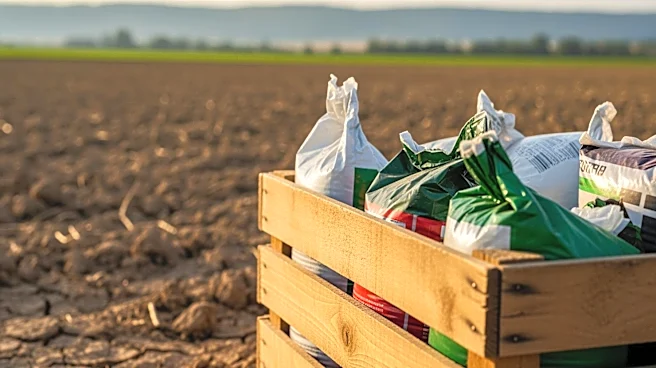
The ongoing conflict in Iran has led to significant concerns regarding fertilizer supply for U.S. crop producers. Many farmers who did not secure their fertilizer needs for the 2026 crop year before March are now facing difficulties in obtaining adequate
supplies. This situation is exacerbated by rising fertilizer costs, which could pose financial challenges for producers already dealing with tight or negative breakeven margins. The increased costs and supply issues may prompt Congress to consider additional economic assistance for U.S. crop producers.
Why It's Important?
The fertilizer supply challenges have broad implications for the U.S. agricultural sector. Rising costs could lead to increased financial strain on farmers, potentially affecting crop production and food prices. This situation highlights the vulnerability of U.S. agriculture to international conflicts and supply chain disruptions. The potential for Congress to intervene with economic assistance underscores the importance of government support in stabilizing the agricultural industry during times of crisis. The outcome of these challenges could influence future policy decisions regarding agricultural subsidies and support mechanisms.
What's Next?
As the situation develops, stakeholders in the agricultural sector will likely push for legislative action to mitigate the impact of rising fertilizer costs. Farmers may seek alternative sources or strategies to manage their fertilizer needs, while industry groups could advocate for policy changes to ensure more stable supply chains. The conflict in Iran may continue to affect global fertilizer markets, prompting further discussions on international trade and supply chain resilience.