

What's Happening?
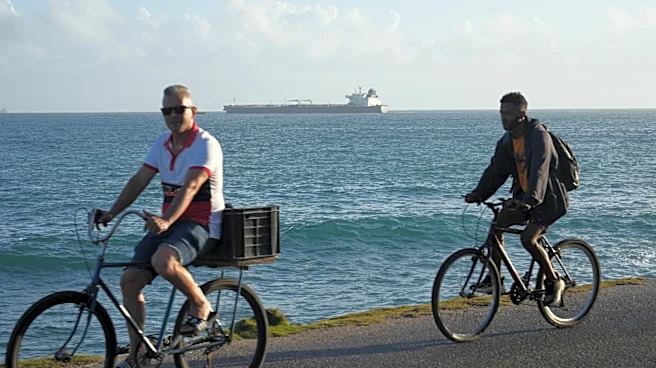
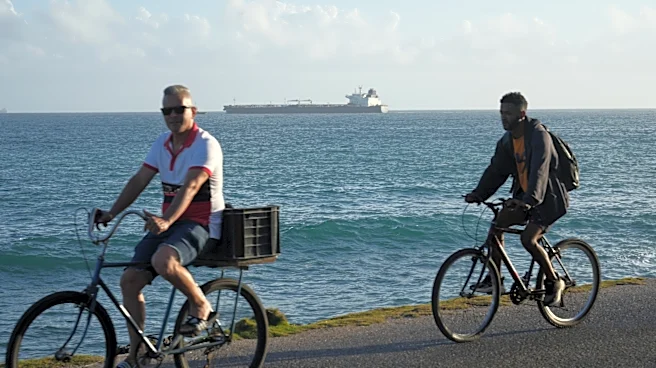
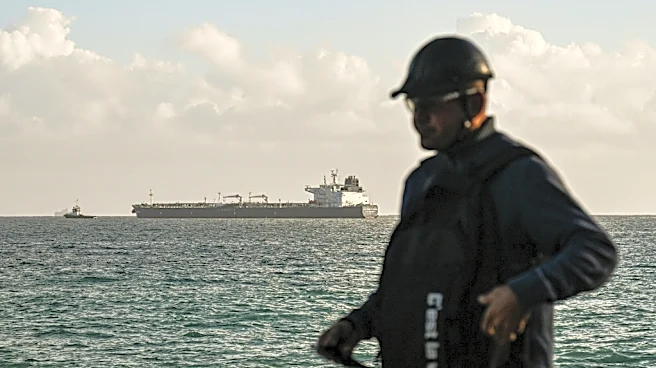
A sanctioned Russian oil tanker, the Anatoly Kolodkin, recently docked at Cuba's Matanzas oil terminal, unloading 700,000 barrels of crude oil. This event occurred despite President Trump's previous declaration of an oil blockade against Cuba, which he had
announced on social media, stating that no oil or money would be allowed into the country. However, Trump later indicated a shift in stance, allowing the Russian ship to pass. Concurrently, Cuba announced the release of 2,010 prisoners, framing it as a humanitarian gesture for Holy Week. Observers have linked these developments to ongoing secret negotiations between the United States and Cuba, suggesting that these actions might be reciprocal gestures of goodwill to advance talks.
Why It's Important?
The docking of the Russian oil tanker and the subsequent prisoner release are significant as they may indicate a thaw in US-Cuba relations, which have been strained under the current US administration's policies. The US oil blockade has severely impacted Cuba's economy, leading to a collapse in tourism and widespread economic hardship. The potential easing of tensions could lead to economic relief for Cuba, which has been struggling with blackouts and shortages. For the US, these developments could represent a strategic move to influence Cuba's political and economic landscape, potentially opening up the Cuban economy to US interests while maintaining pressure on the Cuban government to make political concessions.
What's Next?
The future of US-Cuba relations remains uncertain, but the recent events suggest a possible path forward. If negotiations continue, there could be further reciprocal gestures, such as easing economic restrictions or additional humanitarian actions. However, the outcome will depend on the willingness of both sides to compromise. The US may push for more significant political changes in Cuba, while Cuba will likely seek relief from economic sanctions. The involvement of influential Cuban figures with ties to the regime and the private sector could play a crucial role in shaping the negotiations and the potential opening of Cuba's economy.
Beyond the Headlines
The developments in US-Cuba relations could have broader implications for the region. A shift in US policy towards Cuba might influence other countries' approaches to the island nation, potentially leading to increased foreign investment and economic opportunities. However, the situation also raises ethical questions about the impact on ordinary Cubans, particularly those who do not benefit from private sector growth or remittances from abroad. The potential for increased economic inequality and the fate of those reliant on the state for support remain critical concerns as the situation evolves.