





What's Happening?
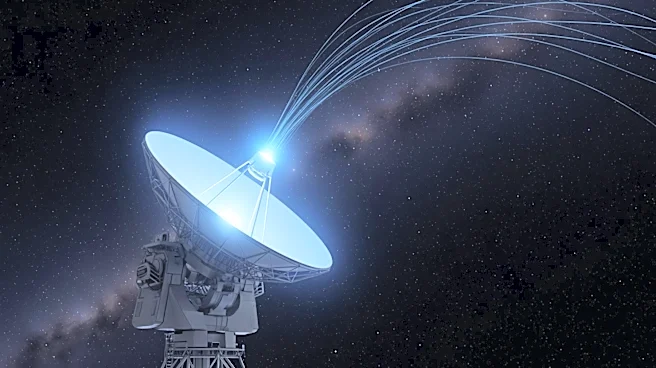
In late 2023, NASA's Voyager 1 spacecraft began transmitting unreadable data from interstellar space, prompting engineers to investigate the issue. The problem was traced to corrupted memory in one of the probe's onboard computers, which was part of the flight
data subsystem responsible for packaging the spacecraft's readings. The engineers devised a solution by rewriting part of the 46-year-old software and transmitting the fix across more than 24 billion kilometers. This repair, completed in April 2024, restored the flow of readable data, marking a significant achievement in remote maintenance. The challenge was compounded by the vast distance, requiring a 45-hour round trip for each command and response, and the outdated technology of the 1970s-era spacecraft.
Why It's Important?
The successful repair of Voyager 1's data transmission is a testament to the ingenuity and persistence of NASA engineers, highlighting the challenges of maintaining aging technology in space. This achievement ensures that Voyager 1, the most distant human-made object, continues to provide valuable scientific data from beyond the solar system. The mission's continuation allows for ongoing exploration and understanding of interstellar space, contributing to humanity's knowledge of the universe. The repair also underscores the importance of developing robust remote maintenance techniques, which are crucial for future deep-space missions where direct intervention is impossible.
What's Next?
Voyager 1's mission team will continue to manage the spacecraft's limited power supply, which is diminishing by a few watts each year. The goal is to keep the probe operational into the 2030s, maximizing the scientific return from this historic mission. As the power supply fades, the team will need to make strategic decisions about which instruments to prioritize. The success of this repair may inform future strategies for maintaining other long-duration space missions, particularly those involving older technology.