



What's Happening?
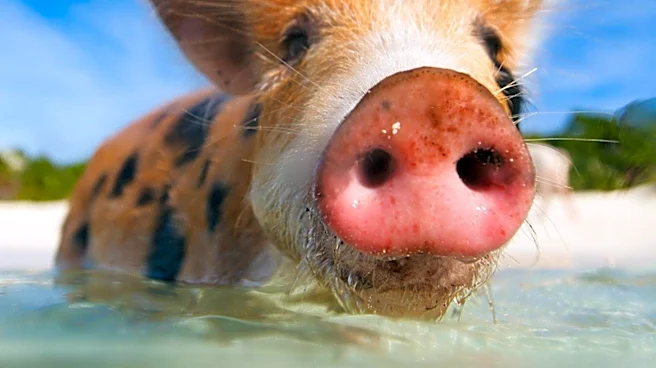
A recent study has explored a novel approach to preventing decompression sickness, commonly known as 'the bends,' using pigs as test subjects. Researchers at Duke University submerged pigs in a high-pressure tank and experimented with different breathing
gases. They found that switching from heliox to a mix of oxygen and carbon tetrafluoride (CF4) during the last minutes of a dive reduced the risk of decompression sickness. The study showed that pigs breathing CF4 had fewer symptoms of the bends compared to those breathing only heliox.
Why It's Important?
This research could lead to safer diving practices, particularly for commercial and military divers who operate at significant depths. Decompression sickness poses serious health risks, and current methods to mitigate it are not foolproof. The use of CF4, which is less soluble than helium, could offer a more effective way to manage gas absorption in tissues, potentially reducing the incidence of the bends. While the immediate application may be limited to professional divers, the findings could influence future diving protocols and equipment design.
What's Next?
Further research is needed to determine the feasibility of using CF4 in human divers, including cost considerations and potential health impacts. If successful, this approach could be integrated into commercial diving operations, enhancing safety standards. The study also opens avenues for exploring other inert gases that might offer similar benefits, potentially revolutionizing deep-sea diving practices.