


What's Happening?
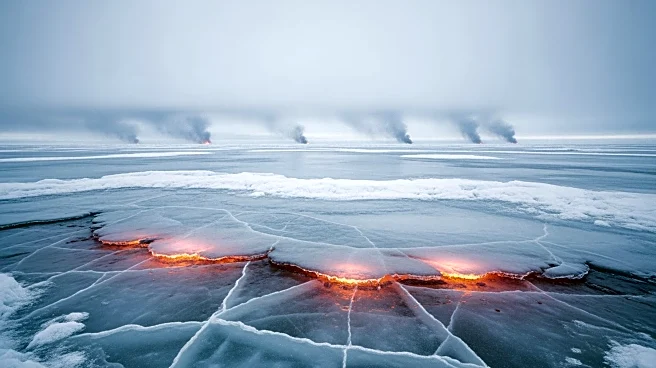
NASA researchers have observed a significant rise in the number of wildfires in the Arctic, with these fires burning larger, hotter, and longer than in previous decades. This increase is attributed to the region's rapidly changing climate, which is warming
nearly four times faster than the global average. The warming climate affects precipitation patterns and reduces soil moisture, making the landscape more susceptible to fires. Lightning, the primary ignition source for these fires, is also occurring further north. The findings are detailed in a report by the Arctic Monitoring and Assessment Programme (AMAP), highlighting the increasing intensity of these fires and their profound impact on Arctic ecosystems.
Why It's Important?
The rise in Arctic wildfires has significant implications for global climate change. These fires release large amounts of carbon stored in peat and permafrost into the atmosphere, contributing to global warming. The intensity of the fires also alters ecosystems, affecting biodiversity and the natural landscape. The changes in the Arctic can have cascading effects on global weather patterns and climate systems. The situation underscores the urgent need for monitoring and understanding these changes to mitigate their impact on the environment and human societies.
What's Next?
To address these challenges, scientists are leveraging existing data and developing new technologies to better understand and monitor Arctic fires. NASA satellites provide critical data for tracking fire activity and modeling future scenarios. There is a need for more targeted observations to understand the underlying causes and to develop strategies for managing these fires. The ongoing research aims to inform policy decisions and conservation efforts to protect Arctic ecosystems and mitigate the broader impacts of climate change.