





What's Happening?
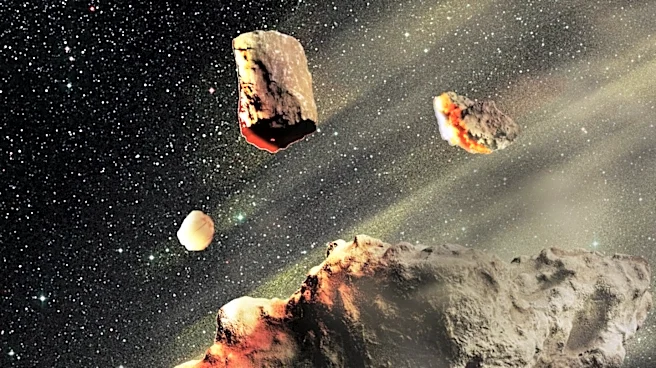
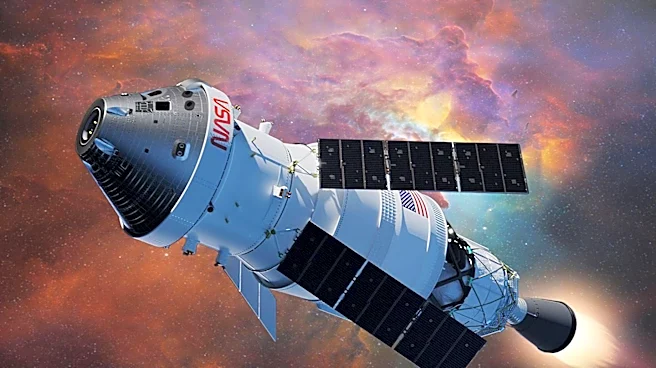
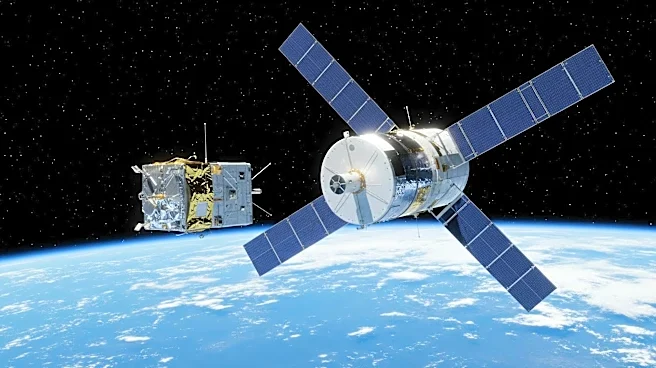
Chinese scientists have developed a new strategy to deflect potentially catastrophic asteroids by detonating a nuclear warhead deep inside a pre-drilled crater on the asteroid. This method, termed 'pre-excavation detonation,' involves using a high-speed
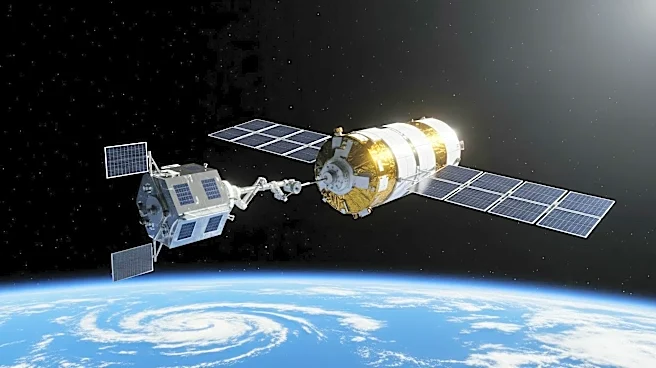
robotic spacecraft to create a deep crater on the asteroid's surface, followed by a nuclear explosion within the crater. This approach is believed to be more effective than previous methods, such as surface detonations or kinetic impacts, as it allows the explosion to transfer more energy to the asteroid. The research, led by Xiaowei Wang at the China Academy of Launch Vehicle Technology, tested this strategy using computer models and found it could effectively neutralize asteroids up to 330 feet in diameter or alter the course of larger ones. However, the plan poses significant logistical challenges, including the need for precise drilling and the risks associated with launching nuclear weapons into space.
Why It's Important?
The development of effective asteroid deflection strategies is crucial for planetary defense, as a collision with a large asteroid could have devastating consequences for Earth. The proposed 'pre-excavation detonation' method offers a potentially more reliable solution than existing techniques, which may not be sufficient for larger or faster-moving asteroids. This research highlights the importance of international collaboration and technological advancement in space exploration and defense. Successfully implementing such a strategy could prevent catastrophic events and protect human life and infrastructure. However, the logistical and ethical challenges of deploying nuclear weapons in space must be carefully considered.
What's Next?
Further research and development are needed to address the logistical challenges of the 'pre-excavation detonation' strategy. This includes refining the technology required to drill precise craters on asteroids and ensuring the safe handling and deployment of nuclear warheads in space. International cooperation will be essential to establish protocols and agreements for the use of nuclear technology in space. Additionally, continued monitoring of near-Earth objects and advancements in detection technology will be crucial to provide sufficient warning time for implementing such deflection strategies.