





What's Happening?
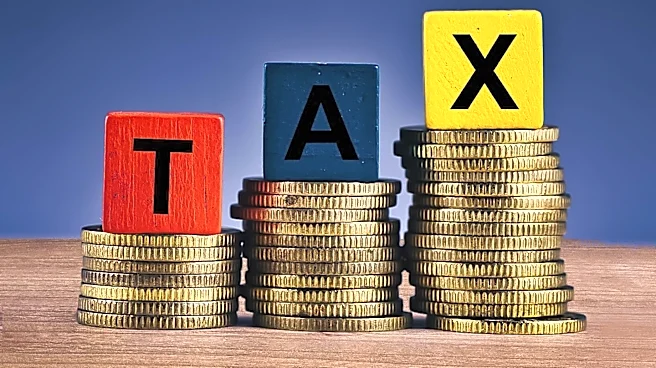
House Democrats, including Representatives Greg Casar, Valerie Foushee, and Sara Jacobs, have introduced the AI Tax and Work Protection Act. This legislative proposal aims to tax AI companies and establish a new Work Protection Administration to create
jobs that are resistant to AI displacement. The bill is part of a broader effort to address potential job losses due to AI advancements, as highlighted by predictions from industry leaders like Anthropic CEO Dario Amodei and Verizon CEO Dan Schulman. The proposal also includes plans for the Bureau of Labor Statistics to gather more data on AI's impact on the workforce.
Why It's Important?
The introduction of the AI Tax and Work Protection Act is significant as it addresses growing concerns about AI-induced job displacement. With predictions of substantial job losses in the near future, the bill seeks to ensure that workers are not left behind as AI technology advances. By taxing AI companies and using the revenue to create AI-proof jobs, the legislation aims to balance technological progress with workforce stability. This move could set a precedent for how governments globally might handle the economic impacts of AI.
What's Next?
If passed, the AI Tax and Work Protection Act will lead to the establishment of a Work Protection Administration, which will be responsible for creating jobs that cannot be easily replaced by AI. The bill's progress will be closely watched by stakeholders, including tech companies, labor unions, and policymakers, as it could influence future AI-related legislation. Additionally, the collection of more comprehensive data on AI's impact on employment will provide valuable insights for shaping future policies.