





What's Happening?
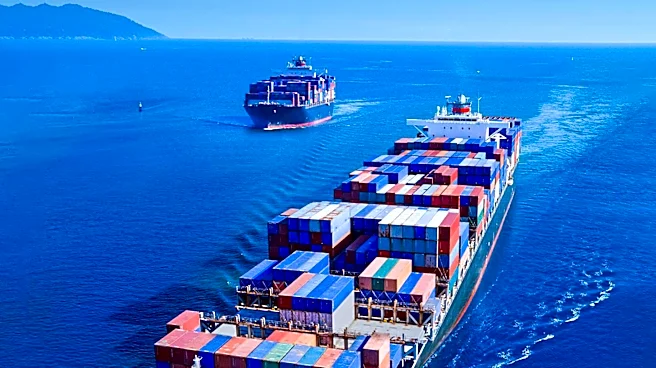
The ongoing conflict between Iran and the United States has intensified over control of the Strait of Hormuz, a critical global energy passage. Iran has demonstrated its capability to disrupt commercial shipping through the strait by targeting vessels
with drones and cruise missiles. This has challenged the long-standing assumption that the Strait of Hormuz would remain an open international waterway even during conflicts. The U.S. and Gulf states find Iran's actions unacceptable, as control over the strait would allow Iran to levy significant transit fees and influence global energy flows. In response, regional governments and energy companies are accelerating projects to create alternative routes for oil and gas exports, reducing reliance on the strait.
Why It's Important?
The strategic importance of the Strait of Hormuz cannot be overstated, as it accounts for 20% of the world's energy trade. Iran's ability to disrupt this passage poses a significant threat to global energy security and economic stability. The U.S. and its allies are concerned that Iran's control over the strait could lead to increased energy prices and economic instability. In response, countries in the Middle East are investing in infrastructure to bypass the strait, which could diminish Iran's leverage. This shift in energy strategy highlights the geopolitical importance of securing reliable energy routes and reducing dependency on chokepoints vulnerable to conflict.
What's Next?
As Iran continues to assert its influence over the Strait of Hormuz, the U.S. and its allies are likely to increase diplomatic and economic efforts to support alternative energy routes. This includes expanding existing pipelines and developing new ones to ensure energy security. The U.S. is expected to play a significant role in facilitating these projects, which could reshape the energy landscape in the Middle East. However, these initiatives face challenges such as potential Iranian attacks on infrastructure, construction delays, and financial hurdles. The success of these projects could lead to a long-term reduction in Iran's strategic influence over global energy markets.
Beyond the Headlines
The current situation underscores the broader implications of energy security and geopolitical stability. The shift towards alternative routes reflects a strategic move to mitigate risks associated with reliance on a single chokepoint. This development could lead to a more diversified and resilient global energy network, reducing the potential for any single nation to exert undue influence over global energy supplies. Additionally, the situation highlights the importance of international cooperation in addressing shared security challenges and ensuring the stability of global energy markets.