







What's Happening?
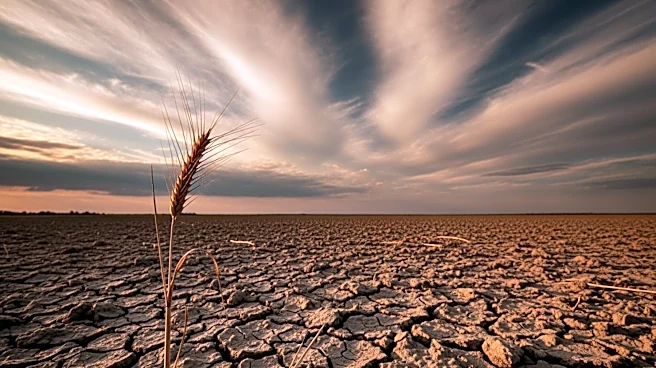
The U.S. agriculture industry is grappling with severe drought conditions, with over 60% of the continental U.S. experiencing moderate drought or worse since April. The Midwest, particularly the Great Plains, has been hit hard, affecting winter wheat
crops. The U.S. Department of Agriculture reports that up to 44% of winter wheat is rated very poor to poor, with Nebraska facing the worst conditions. The drought has also impacted the cattle industry due to poor rangeland conditions. However, relief may come with the onset of the monsoon season in July and the development of El Niño conditions in October, which could bring more rainfall.
Why It's Important?
The drought poses significant risks to the U.S. agriculture sector, potentially leading to reduced crop yields and financial losses for farmers. The high abandonment rate of winter wheat, reminiscent of the Dust Bowl era, underscores the severity of the situation. Water shortages in the West, exacerbated by low reservoir levels, threaten the supply of key crops like lettuce and leafy greens. The reliance on groundwater due to surface water scarcity could lead to long-term environmental impacts, such as land subsidence and soil degradation.
What's Next?
Farmers are hopeful for relief from the upcoming monsoon season and the potential rainfall associated with El Niño. However, the industry must navigate the current drought conditions and prepare for future climate variability. Strategies to improve water management and crop resilience will be essential to mitigate the impacts of prolonged dry periods and ensure food security.