






What's Happening?
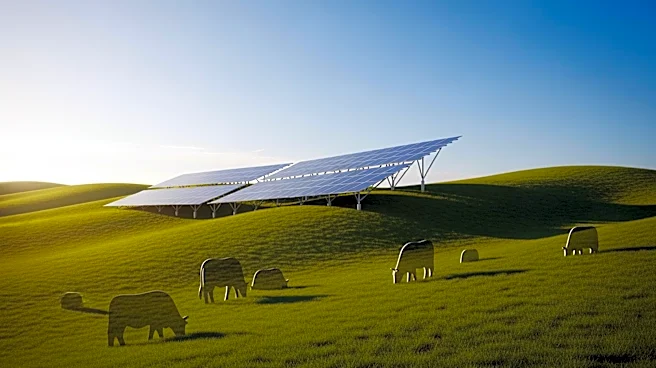
Silicon Ranch has launched a solar farm in Christiana, Tennessee, that integrates cattle grazing beneath solar panels. This initiative, part of a broader agrivoltaics trend, aims to demonstrate that cattle can thrive in solar sites, potentially expanding
the use of agricultural land for solar energy production. The 40-acre farm features panels raised slightly to accommodate cattle, with software to adjust panel angles for grazing. This project seeks to prove the viability of combining solar energy production with cattle farming, offering a sustainable solution to meet increasing electricity demands without contributing to carbon emissions.
Why It's Important?
The integration of cattle grazing with solar farms represents a significant step in sustainable energy and agricultural practices. By utilizing land for both energy production and agriculture, this model could help preserve farmland and provide additional income for farmers. It addresses the challenge of land use in renewable energy expansion, offering a dual-purpose solution that supports both energy needs and agricultural livelihoods. This approach could mitigate the financial pressures on farmers, who face challenges from trade wars, climate change, and economic pressures, by providing a new revenue stream while maintaining agricultural productivity.
What's Next?
Silicon Ranch plans to monitor the project's success over the next year, aiming to convince more farmers of the benefits of solar grazing. If successful, this model could be adopted more widely, potentially transforming how solar farms are developed on agricultural land. The company is working with researchers and farmers to refine best practices, with the hope of expanding this approach to more sites. The success of this project could lead to broader acceptance and implementation of agrivoltaics, influencing energy policy and agricultural practices across the U.S.
Beyond the Headlines
The project highlights the potential for agrivoltaics to address environmental and economic challenges simultaneously. By reducing heat stress on cattle and improving pasture resilience, this model offers ecological benefits that could enhance livestock health and productivity. It also presents a cultural shift in how land is valued and utilized, promoting a more integrated approach to land management that balances energy production with agricultural heritage.