
What's Happening?
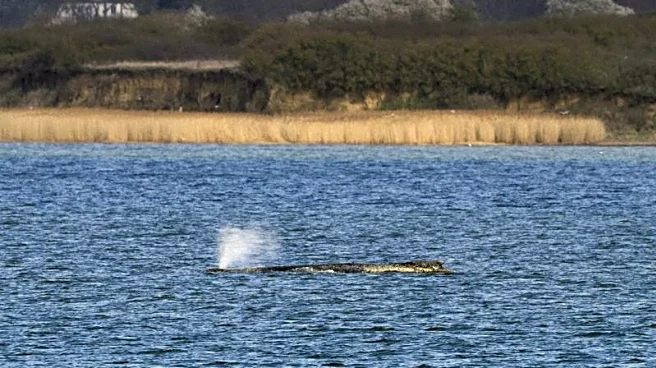
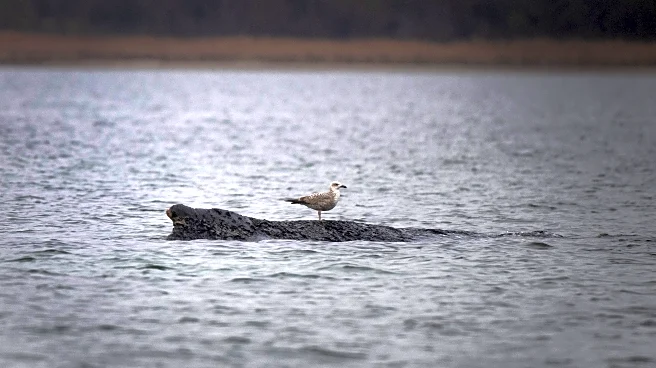
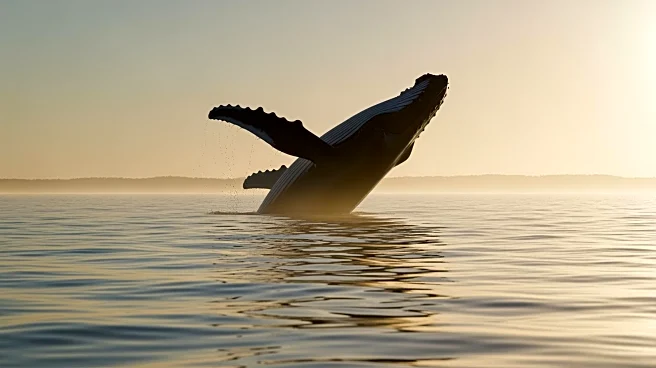
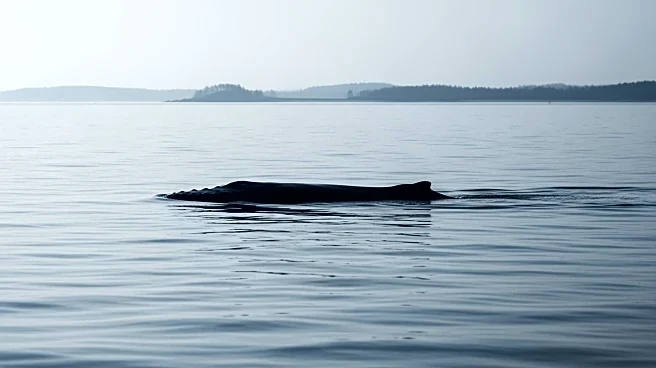
A young humpback whale named Timmy is struggling to escape shallow waters near the Baltic coast in Germany. The whale, estimated to be 12-15 meters long, has been trapped for a week, raising concerns about its survival. Rescuers have been using dredging
gear and boats to guide Timmy back to the Atlantic Ocean. Despite their efforts, the whale remains in distress, with signs of severe stress and skin irritation. Greenpeace and other conservationists are involved in the rescue operation, highlighting the challenges of assisting large marine animals in such situations.
Why It's Important?
Timmy's plight underscores the broader issue of whale strandings, which are often linked to disrupted migration paths and human interference. The situation draws attention to the environmental challenges faced by marine life, particularly in regions where they are not indigenous. The rescue efforts reflect the commitment of conservationists to protect marine biodiversity and address the impacts of human activities on wildlife. Successful rescue operations can enhance public awareness and support for conservation initiatives, while failures may prompt calls for improved strategies and resources.
What's Next?
The immediate focus is on ensuring Timmy's safe return to deeper waters. Rescuers will continue their efforts, monitoring the whale's condition and adjusting their strategies as needed. The situation may prompt further research into the causes of whale strandings and the development of more effective rescue techniques. Conservation groups are likely to advocate for increased protection of marine habitats and stricter regulations on activities that disrupt marine life. The outcome of this rescue operation could influence future policies and public attitudes towards marine conservation.