
What's Happening?
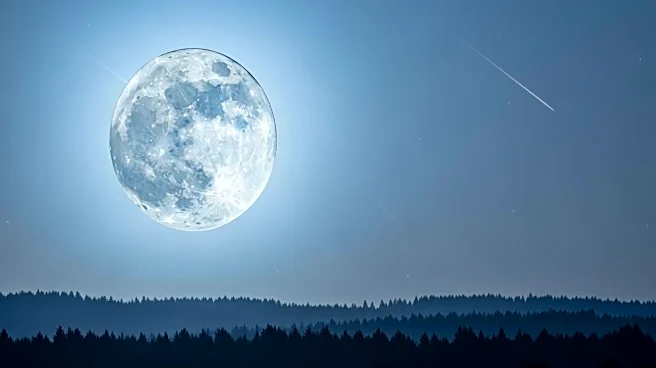
The Quadrantid meteor shower, known for its spectacular displays, is reaching its peak tonight. However, the event is expected to be significantly overshadowed by the Wolf Moon, a Full Supermoon. The Quadrantid meteor shower, active
since December 26, has a narrow peak lasting approximately six hours, unfolding in the morning twilight of January. This celestial event occurs when fragments of an asteroid collide with Earth's atmosphere, creating shooting stars. Despite the potential for up to 200 meteors per hour under ideal dark sky conditions, NASA predicts an hourly rate of just 10 meteors due to the bright light of the Wolf Moon. The January full moon, often referred to as the 'Wolf Moon,' is named for the howling of predators during the scarcity of winter, although they do not actually howl at the moon. The Quadrantid meteors appear to radiate from a patch of sky near the Big Dipper, a prominent asterism in the Ursa Major constellation.
Why It's Important?
The Quadrantid meteor shower is one of the strongest meteor showers of the year, typically offering a spectacular display of shooting stars. However, the presence of the Wolf Moon, a Full Supermoon, will diminish the visibility of the meteors, impacting the experience for skywatchers. This event highlights the influence of lunar brightness on astronomical observations, demonstrating how natural phenomena can affect the visibility of celestial events. For astronomers and enthusiasts, the reduced visibility of the Quadrantid meteors due to the Wolf Moon serves as a reminder of the challenges in observing and studying meteor showers. The event also underscores the importance of timing and conditions in astronomical observations, as the brightness of the moon can significantly alter the experience and data collection during such events.
What's Next?
Skywatchers and astronomers may need to adjust their plans for observing the Quadrantid meteor shower due to the bright light of the Wolf Moon. Those interested in viewing the meteors might consider seeking locations with minimal light pollution to maximize visibility. Additionally, the event may prompt discussions within the astronomical community about strategies for observing meteor showers under challenging conditions. Future meteor showers may be planned with consideration of lunar phases to optimize viewing experiences. The interplay between lunar brightness and meteor visibility could lead to further studies on how celestial events are affected by natural light sources.
Beyond the Headlines
The Wolf Moon's impact on the Quadrantid meteor shower offers insights into the broader implications of lunar brightness on astronomical observations. This event may encourage further exploration of how natural light sources, such as the moon, affect the visibility and study of celestial phenomena. The diminished visibility of the meteors due to the Wolf Moon could lead to advancements in observational techniques and technologies designed to mitigate the effects of lunar brightness. Additionally, the event highlights the cultural significance of the Wolf Moon, named for the howling of predators during winter, and its role in shaping human perceptions of celestial events.