
What's Happening?
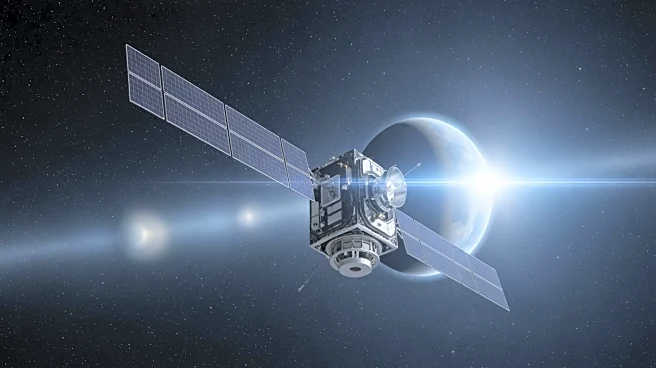
NASA's Pandora small satellite has been launched aboard a SpaceX Falcon 9 rocket from Vandenberg Space Force Base in California. The mission, part of the Twilight commercial rideshare, aims to study the atmospheres
of at least 20 exoplanets and the activity of their host stars. Pandora will operate in a sun-synchronous orbit, allowing it to pass over the same spot on Earth at the same time each day. The satellite will use its telescope to collect visible and infrared light, helping scientists differentiate between signals from planetary atmospheres and their stars. The mission is a collaboration between NASA's Goddard Space Flight Center, Lawrence Livermore National Laboratory, and other institutions.
Why It's Important?
The Pandora mission represents a significant advancement in exoplanet research, providing valuable data on the composition of exoplanet atmospheres. This information is crucial for understanding the potential habitability of these distant worlds. The mission also supports NASA's broader goals of exploring the universe and identifying planets that could support life. By improving the ability to distinguish between planetary and stellar signals, Pandora will enhance the capabilities of future missions, including the James Webb Space Telescope. The mission's success could lead to new discoveries about the formation and evolution of planetary systems.