
What's Happening?
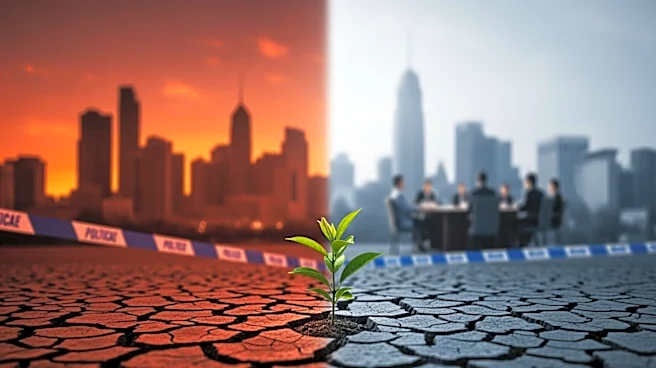
Los Angeles is in the midst of a significant rebuilding effort following last year's devastating wildfires. The reconstruction process has been characterized by a focus on speed, often at the expense of safety
and long-term resilience. Jonathan Vigliotti, a correspondent who has documented these efforts in his book 'Torched,' highlights the challenges faced by the city as it attempts to restore normalcy. The urgency to rebuild quickly has led to concerns about whether the necessary precautions are being taken to prevent future disasters. The city's approach has sparked a debate on the balance between rapid recovery and the implementation of measures that could mitigate the impact of similar events in the future.
Why It's Important?
The rebuilding efforts in Los Angeles are crucial not only for the immediate recovery of the affected areas but also for setting a precedent for how urban centers respond to natural disasters. The emphasis on speed over safety raises questions about the sustainability and resilience of the rebuilt infrastructure. This situation has broader implications for urban planning and disaster preparedness across the United States, as cities increasingly face the threat of climate-related events. The decisions made in Los Angeles could influence policies and practices in other regions, affecting how communities nationwide prepare for and respond to similar challenges. Stakeholders, including policymakers, urban planners, and residents, have a vested interest in ensuring that rebuilding efforts are both efficient and resilient.
What's Next?
As Los Angeles continues its rebuilding efforts, there is a need for ongoing evaluation of the strategies being employed. Stakeholders may push for more stringent building codes and regulations to ensure that new structures are better equipped to withstand future wildfires. Additionally, there could be increased advocacy for integrating climate resilience into urban planning. The city's approach will likely be scrutinized by other municipalities, potentially leading to broader discussions on national policies related to disaster recovery and climate adaptation. The outcome of these efforts could shape future legislative and regulatory frameworks aimed at enhancing the resilience of urban areas across the country.