


What's Happening?
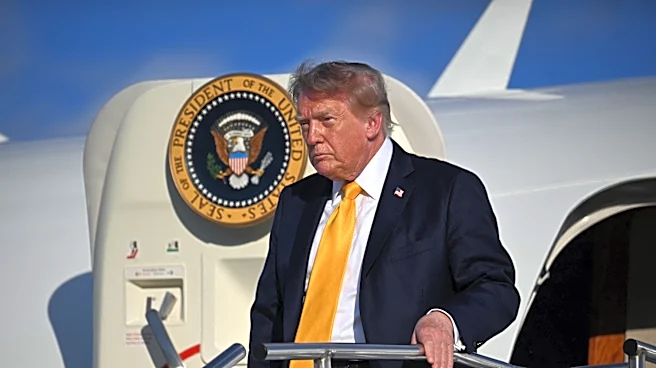
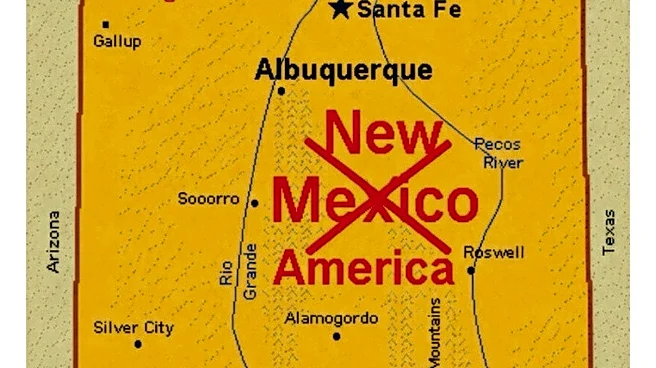
U.S. Representative Gabe Vasquez has publicly opposed President Trump's suggestion to rename the state of New Mexico as 'New America'. This comes after President Trump shared an image on social media depicting the state with 'Meksiko' crossed out and
replaced with 'Amerika'. Representative Vasquez stated, "You don’t get to erase New Mexico. Not our name. Not our history. Not our culture. The President may want to call us 'New America,' but we know who we are." This incident is part of a broader pattern of President Trump's actions regarding official names, including a January 2025 order for the U.S. government to refer to the Gulf of Mexico as the 'American Gulf' and an August executive order to rename Lake Ontario as 'Lake America' amid trade tensions with Canada. New Mexico Governor Michelle Lujan Grisham also criticized President Trump's actions, accusing him of 'repainting maps' while working families face rising fuel costs. Senator Martin Heinrich and Representative Melanie Stansbury echoed these sentiments, emphasizing the state's established identity.
Why It's Important?
This issue highlights the significant cultural and historical identity of U.S. states and the potential political ramifications of attempts to alter them. New Mexico, with its rich Hispanic and Indigenous heritage, views its name as integral to its identity. President Trump's suggestion, perceived as an attempt to erase this heritage, has drawn strong condemnation from state officials across the political spectrum. Such actions can be seen as undermining regional autonomy and cultural recognition, potentially alienating a significant portion of the electorate. Furthermore, this incident reflects a broader trend of President Trump's administration engaging in symbolic gestures that challenge established norms and names, which can create diplomatic friction, as seen with Canada regarding Lake Ontario, and previously with Denmark over Greenland. For New Mexico, the name is not merely a label but a reflection of its unique history and diverse population, making any proposed change a deeply sensitive issue that resonates with state pride and cultural preservation.
What's Next?
The immediate aftermath of President Trump's suggestion is likely to involve continued public discourse and reaffirmation of New Mexico's identity by its political leaders and residents. While President Trump's comments are currently a suggestion, any formal attempt to change the state's name would require significant legislative action and would undoubtedly face immense opposition from state and federal representatives from New Mexico. This event may also prompt further discussions on the importance of cultural preservation and the respect for established geographical and historical names within the U.S. political landscape. It could also serve as a rallying point for New Mexico's political figures to emphasize the state's unique contributions to the nation. The broader pattern of President Trump's renaming efforts suggests that similar controversies could arise concerning other geographical features or entities, potentially leading to ongoing debates about national identity and historical recognition.
Beyond the Headlines
Beyond the immediate political reactions, this incident touches upon deeper themes of national identity, cultural heritage, and the power of language. The name 'New Mexico' itself signifies a historical connection to both Spanish colonial heritage and the broader American narrative. Attempts to rename it can be interpreted as an effort to homogenize or erase specific cultural influences, which could have long-term implications for how diverse identities are recognized and valued within the United States. Such actions can inadvertently fuel debates about historical revisionism and the role of federal authority in defining state identities. Ethically, it raises questions about respecting the self-determination and cultural integrity of communities. The strong pushback from New Mexico officials underscores the profound attachment people have to their state's name as a symbol of their collective history and unique place within the nation, highlighting the enduring significance of cultural symbols in political discourse.