







What's Happening?
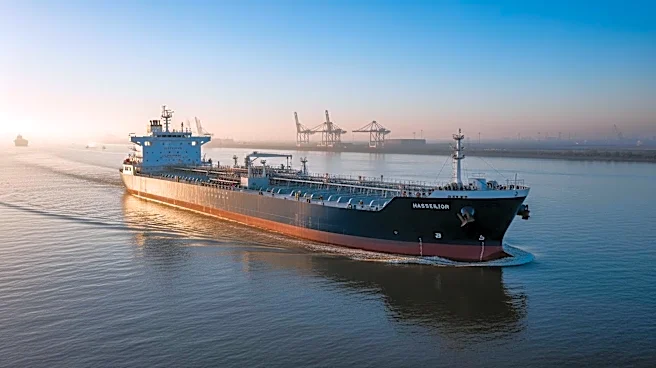
American mariners gathered in Garyville, Louisiana, to protest the arrival of a Chinese-owned asphalt tanker, Jin Zhou Wan, which has been operating under a White House waiver allowing foreign labor in U.S. maritime transportation. The waiver, initially
enacted due to high energy costs, permits foreign vessels to transport U.S. cargoes, a practice typically restricted by the Jones Act to U.S.-flagged ships and crews. The Seafarers International Union (SIU) argues that this undermines American jobs and maritime readiness. The waiver is set to expire on August 16, and there is pressure from Jones Act supporters, including key Republican leaders, to end it.
Why It's Important?
The use of foreign vessels in U.S. domestic trade raises significant concerns about the protection of American maritime jobs and the strategic importance of maintaining a robust U.S. merchant marine. The Jones Act is designed to ensure that domestic shipping routes are served by American ships and crews, supporting national security and economic interests. The continuation of the waiver could weaken these protections, potentially leading to job losses and reduced maritime capabilities. The debate highlights the tension between economic pressures and the need to uphold longstanding maritime policies.
What's Next?
The future of the waiver remains uncertain, with the administration yet to decide on its renewal. The outcome will depend on balancing economic considerations with the need to protect American maritime interests. If the waiver is not renewed, it could lead to a restoration of Jones Act protections, reinforcing the role of U.S. vessels in domestic trade. However, if extended, it may prompt further protests and legislative action from Jones Act supporters seeking to safeguard American jobs.