






What's Happening?
The U.S. Department of Agriculture (USDA) is actively working to enhance its response to the New World Screwworm (NWS) outbreak by expanding sterile fly production and developing a new, more efficient strain. The NWS, a parasitic fly that lays eggs in the wounds
of warm-blooded animals, has recently re-emerged in the U.S., posing a threat to livestock and wildlife. The USDA's Agricultural Research Service (ARS) scientists, in collaboration with university partners, have developed NovoFly™, an all-male strain of sterile screwworm flies. This strain is designed to make the Sterile Insect Technique (SIT) more efficient by producing only male flies, which are the primary agents in preventing reproduction of wild females. Currently, the COPEG facility in Panama produces approximately 100 million sterile flies per week, and additional production capacity is being developed in Mexico and at Moore Air Base in Texas. The goal is to reach or exceed the 500 million sterile flies released weekly during the previous U.S. eradication effort. NovoFly™ is not yet operational and is undergoing regulatory approval by the U.S. Environmental Protection Agency. Researchers are also conducting field tests to ensure NovoFly™ males can effectively compete with wild males for mates before large-scale deployment.
Why It's Important?
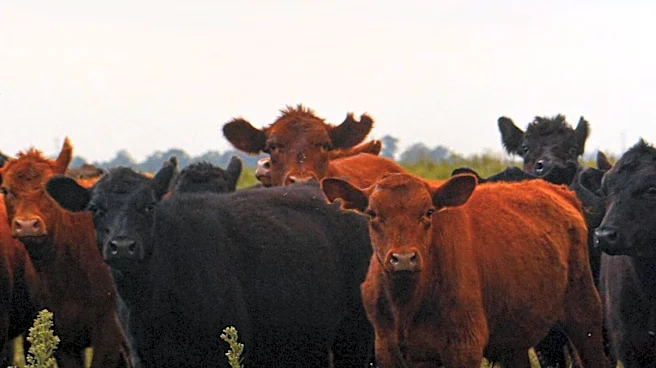
The development and potential deployment of the NovoFly™ strain are crucial for effectively combating the re-emerging New World Screwworm threat in the U.S. The NWS poses a significant risk to the nation's livestock industry, potentially causing severe injury and death to animals, leading to substantial economic losses for producers. The Sterile Insect Technique (SIT) has been historically proven effective in eradicating NWS from the U.S., and enhancing its efficiency is paramount. By producing an all-male strain, NovoFly™ could essentially double the number of effective sterile flies available for release without requiring major changes to existing production facilities. This increased capacity is vital for overwhelming wild screwworm populations and preventing their reproduction. The financial implications of a prolonged or widespread NWS outbreak, including veterinary costs, animal losses, and trade restrictions, could be immense. Therefore, accelerating the development and deployment of advanced tools like NovoFly™ is critical for protecting agricultural interests, ensuring food security, and safeguarding the health of both domestic animals and wildlife across the country.
What's Next?
The immediate next step for the NovoFly™ strain is to complete the regulatory approval process with the U.S. Environmental Protection Agency. Concurrently, researchers will continue field tests to definitively determine if NovoFly™ males can effectively compete with wild males for mates. A positive outcome from these tests is essential before the strain can be deployed on a larger scale. Once approved and validated, NovoFly™ could be integrated into designated screwworm rearing facilities, significantly boosting the number of sterile male flies available for release. The USDA's Animal and Plant Health Inspection Service will continue to coordinate sterile fly efforts across the U.S., Mexico, and Central America. The expansion of sterile fly production capacity at facilities in Panama, Mexico, and Texas will proceed, aiming to reach the target of approximately 500 million sterile flies per week. The successful operationalization of NovoFly™ is anticipated to be a game-changer in the ongoing fight against the New World Screwworm, potentially leading to a more rapid and effective eradication of the pest from affected areas.
Beyond the Headlines
The innovation behind NovoFly™ represents a significant advancement in pest management, showcasing how genetic research can be leveraged to enhance traditional biological control methods. The development of an all-male sterile strain not only improves efficiency but also highlights the precision now achievable in insect control, minimizing non-target impacts. This approach could set a precedent for managing other agricultural pests and disease vectors, offering a more sustainable and environmentally friendly alternative to chemical pesticides. The re-emergence of the screwworm, despite its previous eradication, serves as a stark reminder of the constant vigilance required in biosecurity and the potential for global trade and climate change to reintroduce eradicated threats. The collaborative effort between USDA scientists and university collaborators underscores the importance of interdisciplinary research in addressing complex biological challenges. Furthermore, the investment in expanding sterile fly production infrastructure reflects a long-term commitment to protecting the U.S. agricultural economy and public health from invasive species, emphasizing the strategic value of biological countermeasures in national security.