



What's Happening?
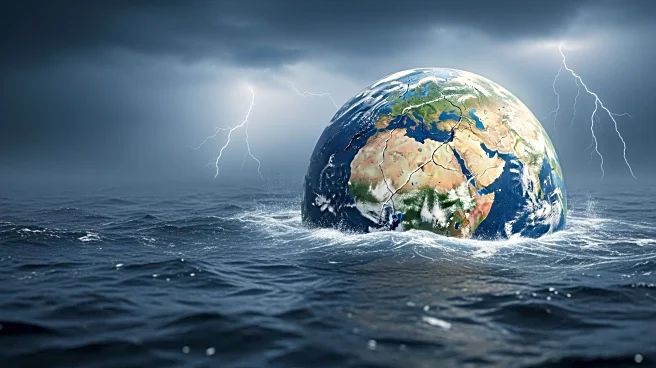
Victims of Typhoon Rai, which struck the Philippines in 2021, have filed a legal claim against Shell in UK courts. The claimants argue that Shell's fossil fuel activities contributed to the severity of the typhoon, which resulted in significant destruction
and loss of life. The legal action is based on the assertion that Shell is responsible for 2% of historical global greenhouse gas emissions, as per the Carbon Majors database. The case is being brought in the UK because Shell is domiciled there, although it will apply Philippine law where the damage occurred. Shell has denied the allegations, calling the claim baseless and stating that it had no unique knowledge about climate change.
Why It's Important?
This legal case is significant as it represents a novel approach to holding fossil fuel companies accountable for climate change impacts. If successful, it could set a precedent for similar claims worldwide, potentially leading to increased legal and financial risks for major oil and gas companies. The case also highlights the growing role of climate science in legal proceedings, as advancements in attribution science make it easier to link specific weather events to climate change. This could influence public policy and corporate strategies regarding emissions and climate change mitigation.
What's Next?
The case has been filed at the Royal Courts of Justice, marking the beginning of what could be a lengthy legal process. Detailed particulars of the claim are expected by mid-next year. The outcome of this case could influence future litigation against fossil fuel companies and impact their operational and financial strategies. Environmental groups are likely to continue supporting such legal actions, while fossil fuel companies may need to reassess their climate policies and public relations strategies.
Beyond the Headlines
This case underscores the ethical and legal challenges facing fossil fuel companies as they navigate the transition to a low-carbon economy. It raises questions about corporate responsibility and the extent to which companies should be held accountable for historical emissions. The case also reflects broader societal shifts towards demanding greater accountability from corporations for their environmental impacts.