






What's Happening?
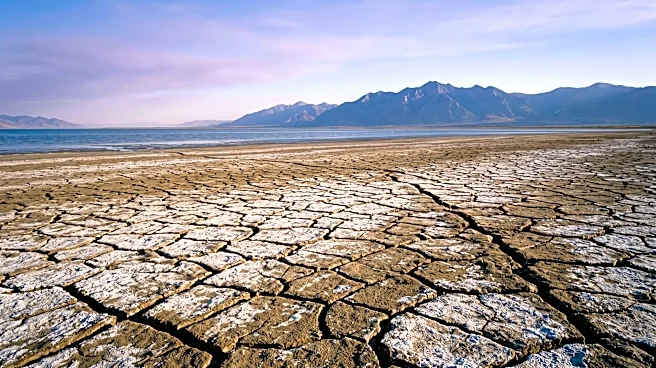
As the Great Salt Lake continues to recede towards historic lows, researchers are intensifying efforts to understand the dust emanating from its dry lake bed and its potential effects on human health. Scientists at the University of Utah are developing
models to differentiate between dust from the lake and other sources, such as mining, and to pinpoint the specific areas of the lake contributing the most dust. These findings from a current project are expected to be released early next year. Concurrently, investigations are underway to determine the exact composition of the airborne dust, including levels of heavy metals like arsenic and lead, and to assess the health risks they pose to the 2.5 million residents along the Wasatch Front. Bryce Bird, director of the Utah Division of Air Quality, noted that while arsenic is known to be present in the sediment, initial air filter data on high-wind days showed levels below laboratory detection limits. The division is also working to establish more dust monitors across northern Utah and is collaborating with environmental and public health officials, as well as the U.S. Environmental Protection Agency, to develop state-specific guidelines for safe metal concentrations in dust storms, as federal standards for such events are currently lacking.
Why It's Important?
The ongoing research into Great Salt Lake dust is crucial for public health and environmental policy in Utah. The potential for airborne heavy metals like arsenic and lead to impact the health of a large population along the Wasatch Front presents a significant concern. Understanding the sources and composition of this dust will enable more targeted and effective mitigation strategies, protecting residents from potential respiratory and other health issues. Furthermore, the development of state-specific guidelines for dust storm safety is vital, as existing federal standards do not adequately address this unique environmental challenge. The collaborative efforts between academic institutions, state agencies, and federal bodies underscore the complexity and urgency of the issue. The long-term implications of the shrinking Great Salt Lake extend beyond immediate health concerns, potentially affecting the region's habitability and economic stability, making this research a critical component of the state's environmental and public health agenda.
What's Next?
Researchers anticipate sharing initial findings from their modeling efforts on dust sources early next year. The Utah Division of Air Quality plans to release data collected from new dust monitors on a rolling basis, though the interpretation of this data will depend on the finalization of state guidelines for safe metal concentrations in dust storms. These guidelines are being developed in coordination with environmental and public health officials and the U.S. Environmental Protection Agency, with no current estimate for their completion. Additionally, Westminster University’s Great Salt Lake Institute is conducting research on microbes and heavy metals and their effects on lung cells. Lawmakers and various state entities are actively working on solutions to preserve the Great Salt Lake, with a sense of urgency emphasized by the upcoming Winter Olympics in Salt Lake City in 2034. Continued momentum in these research and policy efforts is deemed essential to address the lake's decline and its associated environmental and health challenges.
Beyond the Headlines
The shrinking Great Salt Lake and the resulting dust issue highlight a broader environmental crisis with significant ethical and societal dimensions. The potential for a major metropolitan area to become unlivable due to environmental degradation raises profound questions about sustainable development, resource management, and the long-term responsibilities of governance. The lack of federal standards for dust storms containing heavy metals underscores a regulatory gap that could have far-reaching implications for other regions facing similar environmental challenges. This situation also brings to light the tension between immediate economic concerns, such as ground-level ozone pollution, and emerging long-term threats like lakebed dust. The collaborative approach involving scientists, state officials, and public health experts reflects a growing recognition that complex environmental problems require interdisciplinary solutions and sustained public engagement. The urgency expressed by researchers and advocates, particularly in the context of future events like the Olympics, emphasizes the need for proactive measures rather than reactive responses to environmental crises.