
What's Happening?
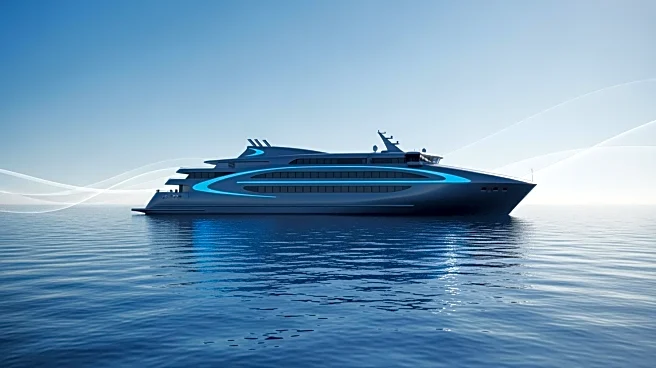
Incat Tasmania has launched Hull 096, a 130-meter all-electric fast ferry, which is set to operate between Buenos Aires, Argentina, and Montevideo, Uruguay. This vessel, claimed to be the largest all-electric ferry globally,
has successfully completed its initial sea trials and will head to South America after final checks in Hobart. The ferry, designed as a RoPax vessel, can accommodate 2,100 passengers and 225 cars, featuring a roll-on, roll-off configuration. It is powered by eight electric motors and equipped with a 40 MWh battery system supplied by Corvus Energy, making it the largest battery system ever installed for maritime transport. The ferry will be charged using high-capacity chargers, with infrastructure planned for installation in South America.
Why It's Important?
The launch of this all-electric ferry marks a significant step in the decarbonization of maritime transport, aligning with global efforts to reduce emissions. The ferry's operation on the Rio de la Plata, a major transportation route, highlights the shift towards sustainable energy solutions in the shipping industry. This development is particularly relevant as regulatory pressures increase for operators to decarbonize fleets. The ferry's introduction is expected to lower operational costs due to reduced fuel expenses and maintenance needs, offering a model for future maritime transport solutions. Additionally, it supports Uruguay's renewable energy goals, as the country has made significant strides in sustainable energy production.
What's Next?
Following its final checks, the ferry will begin operations in early 2026. The success of this project could encourage further investments in electric maritime transport, potentially influencing policy and regulatory frameworks to support similar initiatives. Stakeholders in the shipping industry may closely monitor the ferry's performance, considering it a benchmark for future projects. The expansion of charging infrastructure in South America will be crucial to support the ferry's operations and could pave the way for more electric vessels in the region.
Beyond the Headlines
The introduction of this electric ferry could have broader implications for the global shipping industry, potentially accelerating the transition to electric propulsion systems. It may also influence shipbuilding practices, encouraging the use of lightweight materials like aluminum to enhance efficiency. The project underscores the importance of international collaboration, as components and expertise from various countries contribute to the ferry's development. This initiative could inspire other regions to adopt similar technologies, promoting a more sustainable and environmentally friendly approach to maritime transport.