







What's Happening?
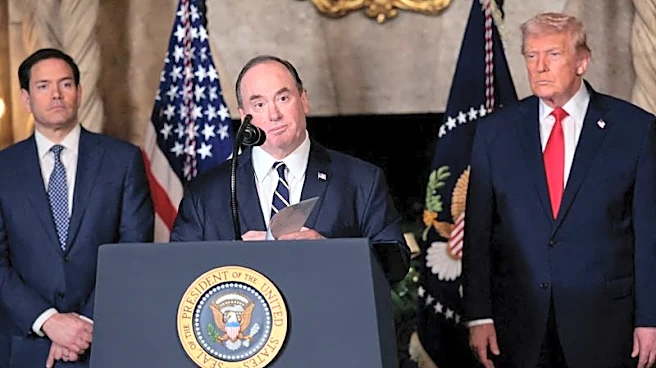
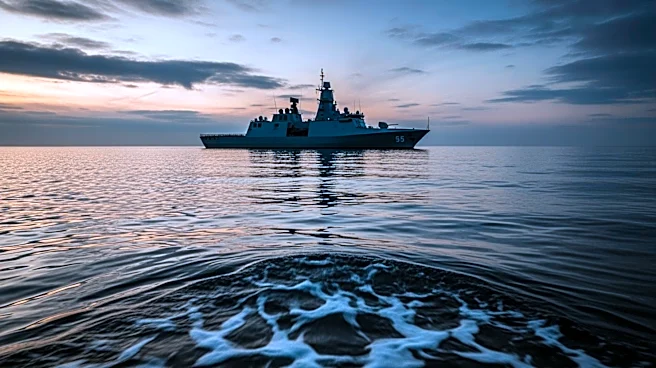
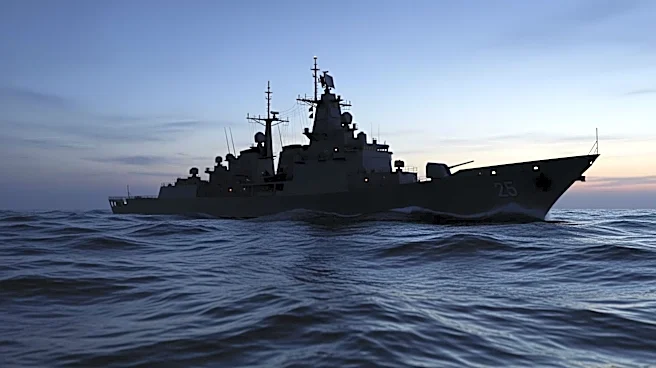
Defense Secretary Pete Hegseth has announced that the United States will maintain its naval blockade on Iran amidst ongoing tensions and conflict. Hegseth emphasized that Iran still has the opportunity to 'choose wisely' and engage in peace talks with
the U.S. However, he warned that if Tehran fails to reach an agreement, its economy could face severe consequences due to the sustained pressure of the blockade. The blockade is part of a broader strategy to compel Iran to negotiate, with the U.S. prepared to keep it in place indefinitely until a satisfactory resolution is achieved.
Why It's Important?
The continuation of the U.S. naval blockade on Iran is a significant development in international relations, particularly affecting the geopolitical landscape in the Middle East. The blockade is designed to exert economic pressure on Iran, potentially leading to a collapse of its economy if no diplomatic resolution is reached. This move underscores the U.S.'s strategic approach to leverage economic sanctions and military presence to influence foreign policy outcomes. The situation could impact global oil markets, given Iran's role as a major oil producer, and may lead to increased tensions in the region, affecting international trade and security.
What's Next?
The future of U.S.-Iran relations hinges on Iran's response to the blockade and the potential for peace talks. If Iran chooses to negotiate, it could lead to a de-escalation of tensions and a lifting of the blockade. However, if Iran remains defiant, the U.S. may continue to apply pressure, potentially leading to further economic and political isolation for Iran. The international community, including allies and adversaries of both nations, will be closely monitoring the situation, as any developments could have far-reaching implications for regional stability and global diplomatic relations.