







What's Happening?
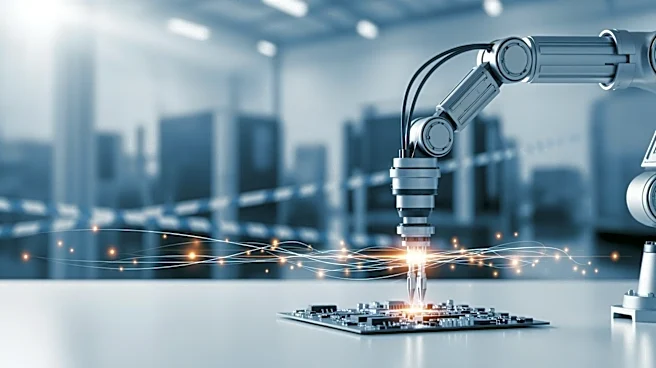
In Jiangsu Province, China, artificial intelligence (AI) is significantly transforming manufacturing processes, particularly in the semiconductor industry. Companies like NESY are utilizing AI to automate various production steps, enhancing precision
and reducing downtime. This shift is part of a broader trend across China's manufacturing sector, where AI is being integrated to improve efficiency and strengthen supply chains. The adoption of AI is also encouraging higher capital spending and capacity expansion, as the demand for chips and automation solutions grows. This development is part of China's efforts to foster new productive forces as outlined in its 15th Five-Year Plan.
Why It's Important?
The integration of AI in manufacturing is crucial for maintaining China's competitive edge in the global market. By automating processes and improving efficiency, Chinese manufacturers can reduce costs and increase output without significantly expanding their workforce. This technological advancement supports China's long-standing strengths in rapid engineering cycles and dense supplier networks. As global demand for AI infrastructure grows, China's ability to quickly adapt and expand its manufacturing capabilities positions it as a key player in the international market. This could have significant implications for global supply chains and economic dynamics.
What's Next?
As AI continues to be integrated into manufacturing, there will likely be increased investment in related technologies and infrastructure. This could lead to further advancements in automation and efficiency, potentially reshaping global manufacturing standards. Additionally, the focus on AI may drive changes in workforce requirements, emphasizing the need for skilled workers capable of operating advanced technologies. Educational institutions and training programs may need to adapt to prepare workers for these new roles, ensuring that the workforce can meet the demands of a rapidly evolving industry.
Beyond the Headlines
The adoption of AI in manufacturing raises important ethical and economic questions. As automation reduces the need for manual labor, there may be concerns about job displacement and the socioeconomic impact on workers. Additionally, the reliance on AI and technology in manufacturing could lead to increased scrutiny regarding data security and privacy. These issues highlight the need for comprehensive policies and regulations to address the challenges and opportunities presented by AI in the manufacturing sector.