


What's Happening?
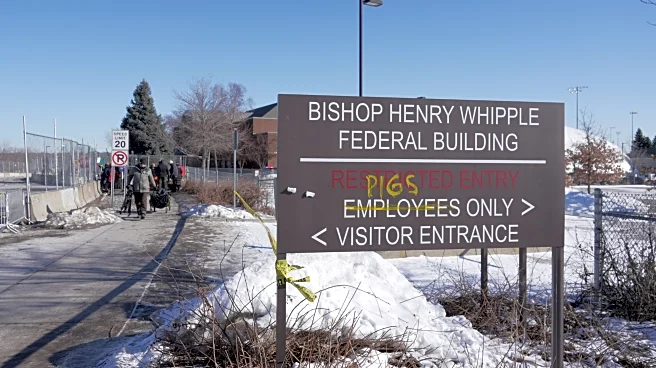
A federal judge in Minnesota has extended an order that protects refugees lawfully residing in the state from being arrested and deported. This decision comes in response to a Trump administration policy that allows for the arrest of refugees who have
entered the U.S. legally but have not yet obtained green cards. The policy, announced by the Department of Homeland Security, requires refugees to return to federal custody one year after their admission to the U.S. for their green card applications to be reviewed. U.S. District Judge John Tunheim granted a motion to convert a temporary restraining order into a preliminary injunction, allowing refugees in Minnesota to live without fear of sudden arrest. The judge criticized the policy, stating it turns the American Dream into a 'dystopian nightmare' and breaks promises made to refugees fleeing persecution.
Why It's Important?
The ruling has significant implications for refugee policy and the rights of individuals seeking asylum in the United States. By challenging the Trump administration's interpretation of immigration law, the decision underscores the ongoing legal battles over immigration policies. The case highlights the tension between federal authority and judicial oversight, with potential impacts on thousands of refugees across the country. The ruling also raises constitutional concerns about the treatment of refugees and the promises made to them upon entering the U.S. This decision could influence future legal interpretations and policies regarding refugee rights and immigration enforcement.
What's Next?
The Trump administration is expected to appeal the ruling, as indicated by statements from the Department of Homeland Security and U.S. Citizenship and Immigration Services. The case will likely continue to develop in the courts, with potential implications for national immigration policy. Advocates for refugees may use this ruling to challenge similar policies in other states, potentially leading to broader legal reforms. The outcome of this case could set a precedent for how refugees are treated under U.S. law and influence future legislative actions regarding immigration and asylum seekers.