


What's Happening?
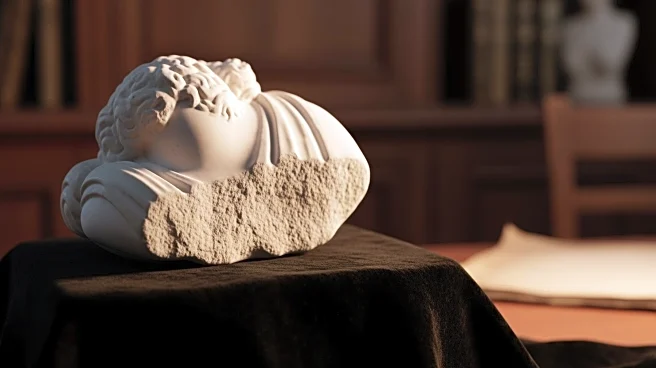
Italian researcher Valentina Salerno has attributed a marble bust and a Pietà painting to Michelangelo, based on extensive archival research and scientific analysis. The bust, located in the Basilica of St. Agnes Outside the Walls in Rome, was previously
thought to be the work of an anonymous artist. Salerno's study, which is not peer-reviewed, suggests the bust was hidden to protect Michelangelo's works. Meanwhile, a Pietà painting acquired by a private collector was analyzed by the Royal Institute for Cultural Heritage of Belgium, linking it to Michelangelo through pigments, monograms, and stylistic parallels. These claims follow the recent sale of a preparatory sketch by Michelangelo for $27.2 million.
Why It's Important?
The attribution of these artworks to Michelangelo could significantly impact the art world, potentially increasing the value and historical significance of the pieces. If confirmed, these findings would expand the known body of work by Michelangelo, offering new insights into his artistic techniques and themes. The claims also challenge existing narratives about Michelangelo's later years, suggesting he may have preserved rather than destroyed his works. This could lead to further investigations and discoveries, influencing art historical scholarship and museum exhibitions.
What's Next?
The art community may see increased scrutiny and debate over Salerno's claims, with experts potentially conducting further analysis to verify the authenticity of the artworks. Museums and collectors might reassess their collections for other potential Michelangelo works. The Italian Carabinieri's art squad is already protecting the bust with an alarm system, indicating heightened security measures for these newly attributed pieces. Future auctions could see a rise in interest and value for Michelangelo's works, driven by these recent discoveries.
Beyond the Headlines
Salerno's research highlights the role of archival documents in art attribution, emphasizing the importance of historical records in uncovering hidden aspects of an artist's legacy. The study also raises questions about the ethics of art preservation and the responsibilities of artists' descendants. The notion that Michelangelo's works were hidden to protect them from an unwanted heir adds a personal dimension to the artist's story, potentially influencing how his legacy is perceived.