


What's Happening?
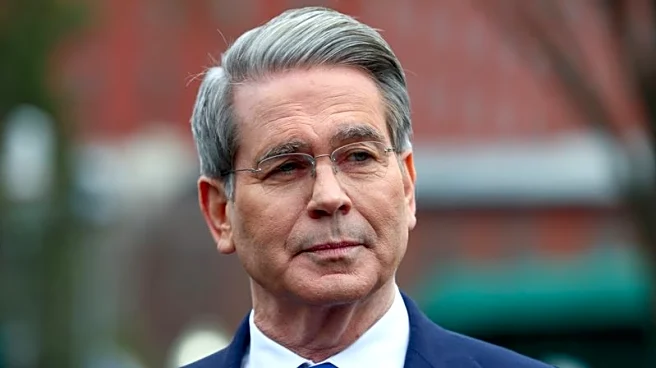
During a recent House Financial Services Committee hearing, a heated exchange occurred between Rep. Maxine Waters and Treasury Secretary Scott Bessent. The discussion centered around the impact of tariffs on inflation and housing affordability. Waters argued
that tariffs imposed by the Trump administration have led to increased prices for goods such as coffee, bananas, and housing materials like lumber and steel. Bessent countered that tariffs do not cause broad-based inflation, citing a San Francisco Federal Reserve report. He also attributed rising housing prices to increased immigration during the Biden administration, which he claimed outpaced housing supply. Waters and Bessent's debate highlights the ongoing concerns about affordability and economic policy impacts on American consumers.
Why It's Important?
The exchange between Waters and Bessent underscores a critical issue facing American voters: the affordability of goods and housing. Tariffs, as discussed, have a complex impact on prices, affecting consumer sentiment and economic stability. While tariffs may not directly cause inflation, they contribute to price increases that strain consumer budgets. The debate also touches on immigration's role in housing markets, with Bessent suggesting that immigration has driven up demand and prices. This discussion is significant as it reflects broader economic challenges and policy decisions that affect everyday Americans, particularly in the context of upcoming midterm elections where economic issues are a key concern.
What's Next?
As Congress prepares to address housing affordability, potential legislative actions could influence the housing market. A bill aimed at incentivizing homebuilding is expected to be considered, which may impact supply and demand dynamics. Additionally, with interest rates decreasing, there could be shifts in housing market trends. Stakeholders, including policymakers and industry leaders, will likely continue to debate the balance between tariffs, immigration, and economic growth, seeking solutions that address affordability without stifling economic progress.
Beyond the Headlines
The debate between Waters and Bessent also highlights deeper issues related to economic policy and its social implications. The role of immigration in economic growth and housing supply is a contentious topic, reflecting broader societal debates about immigration policy. Furthermore, the discussion of tariffs and their impact on consumer prices raises questions about the long-term sustainability of such economic measures and their alignment with broader economic goals. These discussions are crucial as they influence public perception and policy direction in the U.S.