




What's Happening?
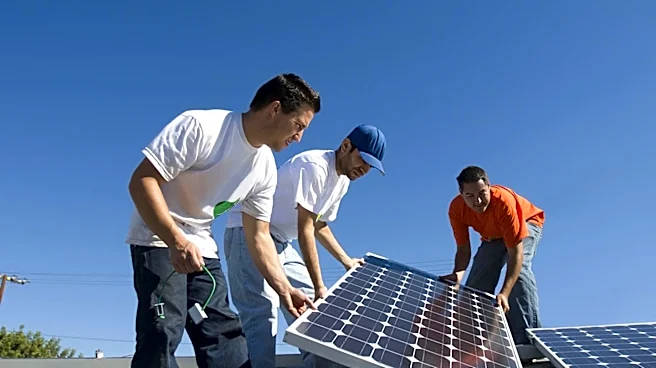
A new energy affordability omnibus bill in the Massachusetts state legislature seeks to address significant delays in solar panel and battery installation permitting. Currently, the average project time for solar installation in Massachusetts is 94 days,
extending to 125 days in Brookline. Residents like David Mendels have experienced six-month delays, while Alaina Kinol waited a full year for her solar panels and battery due to permitting and electrical code issues. The proposed bill, which has passed both the House and Senate and is currently in inter-chamber negotiations, aims to automate the permitting process. This automation is envisioned to reduce soft costs by approximately $3,000 per installation and drastically cut down approval times, potentially allowing permits to be issued within 24 hours if applications meet building and electrical codes.
Why It's Important?
Permitting delays significantly hinder solar adoption, increasing costs and discouraging homeowners from investing in renewable energy. The current lengthy process in Massachusetts, exemplified by Brookline's 125-day average, adds to the 'soft costs' of solar installation, which are already seven times higher in the U.S. than in countries like Australia and Germany. Streamlining this process is crucial for accelerating the state's climate goals and making clean energy more accessible and affordable. Automated permitting could reduce operational costs for solar companies, allowing them to serve more customers efficiently. For residents, quicker installations mean faster access to energy savings and enhanced resilience against power outages, which is particularly vital for those with medical equipment reliant on electricity. This bill represents a critical step towards removing bureaucratic barriers to clean energy deployment.
What's Next?
The energy affordability omnibus bill is currently in a conference committee for negotiation between the House and Senate. Governor Maura Healey has urged for swift action to finalize the bill. If passed, the implementation of automated permitting, potentially through software like Solar APP+, would require collaboration between state and local building officials to ensure correct interpretation of codes. While some local officials, like Brookline's former Building Commissioner Dan Bennett, express skepticism about a 'one-size-fits-all' approach and the need for education, proponents argue that automated systems can reduce failed inspections and increase solar adoption, as seen in other states and municipalities. The outcome of these negotiations will determine the future pace of solar installations and the effectiveness of Massachusetts' efforts to meet its climate objectives.
Beyond the Headlines
The Massachusetts bill highlights a broader national challenge in scaling renewable energy: the 'soft costs' associated with permitting, inspections, and customer acquisition. While hardware costs for solar panels have decreased, administrative hurdles remain a significant barrier. Automated permitting, if successfully implemented, could serve as a model for other states grappling with similar issues, fostering a more efficient and equitable clean energy transition. However, it also raises questions about local autonomy in code enforcement and the need for robust digital infrastructure and training for municipal staff. The debate underscores the importance of policy innovation that not only incentivizes clean energy but also addresses the practical, logistical challenges of its widespread deployment, ensuring that the benefits of solar power are realized by all communities, including those with lower and moderate incomes.