









What's Happening?
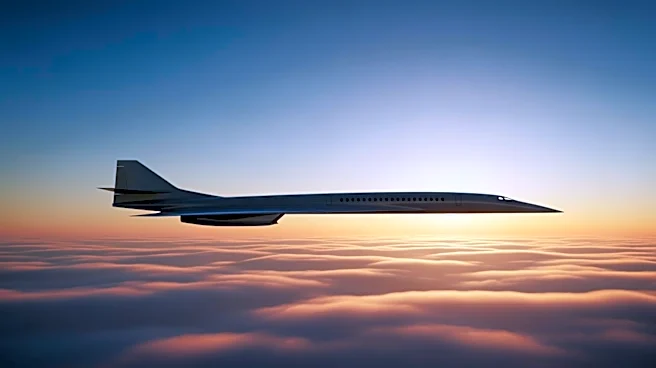
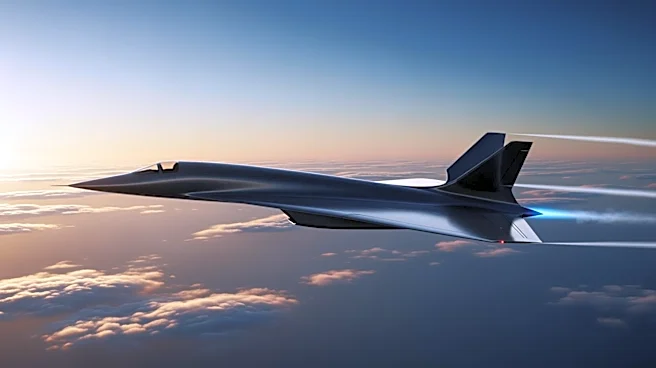
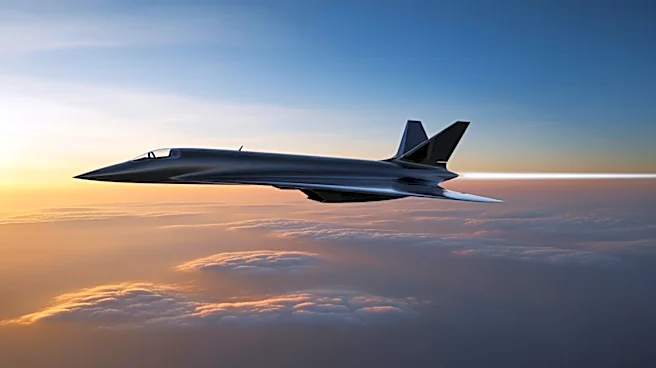
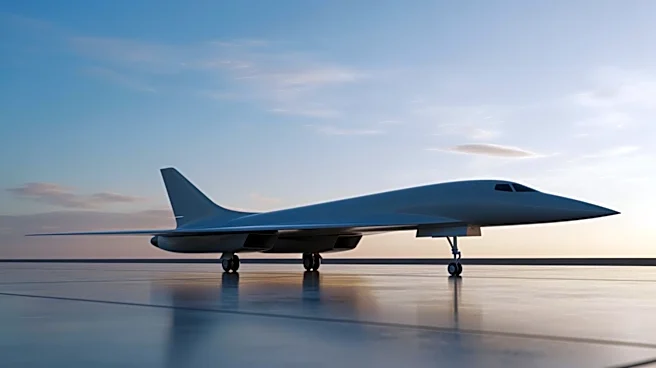
NASA's X-59, an experimental aircraft designed for quiet supersonic travel, has successfully reached its target speed and altitude, flying at Mach 1.4 and 55,000 feet. This achievement marks a significant step in NASA's Quesst mission, which aims to gather
data on public perception of the aircraft's 'quiet sonic thump' during supersonic flights over U.S. communities. The recent flight is part of a series of tests to expand the aircraft's flight envelope, evaluating its performance across various speeds and altitudes. The X-59 is accompanied by a NASA F-15 research aircraft to measure its shock wave signature, an early indicator of its supersonic performance. The data collected will be crucial for future community overflights, where the aircraft will demonstrate its ability to fly supersonic without causing disruptive sonic booms.
Why It's Important?
The successful testing of the X-59 is a pivotal development in the pursuit of commercial supersonic flight over land. By demonstrating the ability to fly at supersonic speeds without generating loud sonic booms, NASA's research could pave the way for regulatory changes that currently restrict such flights. This could lead to faster air travel and new opportunities for the aviation industry, potentially reducing travel times significantly. The data collected from community overflights will inform public policy and help address environmental and noise concerns associated with supersonic travel. Stakeholders in the aviation sector, including airlines and aircraft manufacturers, stand to benefit from the potential expansion of supersonic flight capabilities.
What's Next?
Following the completion of performance testing, the X-59 will enter the acoustic validation phase of the Quesst mission. During this phase, researchers will measure the aircraft's supersonic acoustic signature to ensure it meets the design goal of a quiet sonic thump. Successful validation will lead to community overflights, where NASA will gather public feedback on the noise levels. This feedback will be instrumental in shaping future regulations and commercial applications of supersonic flight. The aviation industry and regulatory bodies will closely monitor these developments, as they could influence the future landscape of air travel.