






What's Happening?
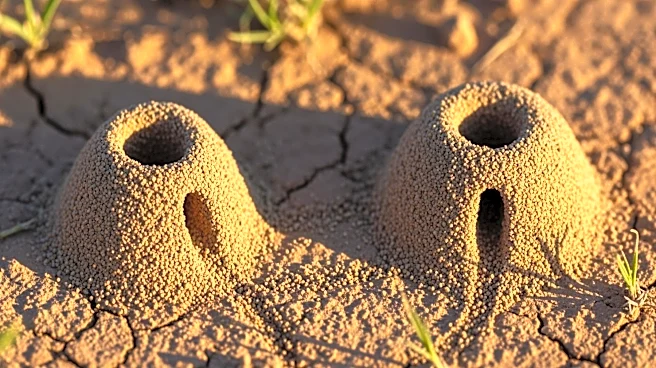
Mark Moffett, an entomologist at the Smithsonian National Museum of Natural History, has documented a unique interaction between two ant species in the Arizona desert. During a five-day observation period in 2006, Moffett observed large harvester ants
(Pogonomyrmex barbatus) allowing smaller cone ants (an undescribed Dorymyrmex species) to crawl over them and clean their bodies, including inside their mandibles. This behavior, reminiscent of fish cleaning symbiosis, was recorded in at least 90 interactions. Moffett's findings, published in the journal Ecology and Evolution, suggest that the cone ants act as 'cleaner ants,' a behavior not previously documented in ants. The study indicates that the cleaning might help remove pathogens from the harvester ants, while the cone ants may benefit from protection and nutritional gains.
Why It's Important?
This discovery sheds light on a rare cooperative behavior in the insect world, where competition and aggression are more common. The interaction between the harvester and cone ants could have implications for understanding symbiotic relationships in nature. For the harvester ants, the cleaning service might reduce disease risk, while the cone ants could gain protection and sustenance. This research highlights the complexity of ecological interactions and could inspire further studies on ant behavior and symbiosis. Understanding such relationships can contribute to broader ecological and evolutionary theories, potentially influencing conservation strategies and the study of biodiversity.
What's Next?
Further research is needed to explore the full extent and implications of this symbiotic relationship. Scientists may investigate whether similar behaviors exist in other ant species or regions. Additionally, understanding the chemical or pheromonal signals involved in this interaction could provide insights into ant communication and cooperation. Future studies might also examine the potential benefits for both species in more detail, such as the specific pathogens removed or the nutritional value gained by the cone ants. This research could pave the way for new discoveries in entomology and ecology.
Beyond the Headlines
The discovery of cooperative behavior between these ant species challenges the traditional view of ants as solely competitive creatures. It suggests that even in harsh environments like the Arizona desert, species can develop mutually beneficial relationships. This finding may prompt a reevaluation of how cooperation and competition are balanced in nature. It also raises questions about the evolutionary pressures that lead to such behaviors and how they might be leveraged in pest management or conservation efforts. The study underscores the importance of field observations in uncovering unexpected aspects of animal behavior.