






What's Happening?
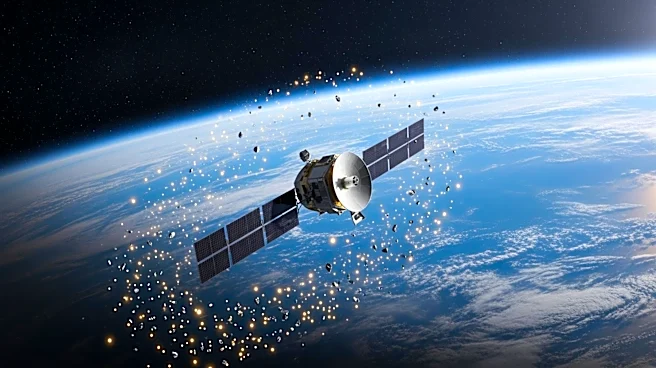
NASA's Earth Observing System (EOS) satellites, including Aqua, Terra, and Aura, are increasingly at risk from space debris, which has necessitated evasive maneuvers that sometimes result in corrupted climate data. Since 2005, the EOS fleet has had to
dodge space debris on at least 32 occasions, consuming precious fuel and potentially compromising data integrity. Aqua, a key satellite in the fleet, has completed over 126,000 orbits and contributed to more than 30,000 scientific publications. However, the growing amount of space debris poses a significant threat to the continuation of such vital climate data collection.
Why It's Important?
The increasing threat of space debris to satellites like Aqua is significant because these satellites provide crucial data for understanding climate change, which informs policy decisions by politicians and business leaders. The loss of data due to evasive maneuvers can hinder scientific efforts to explain and address climate change. As space debris continues to grow, the risk of collision increases, potentially leading to more frequent data loss and higher operational costs. This situation underscores the need for improved space debris management to protect valuable scientific assets.
What's Next?
As the risk of space debris continues to rise, NASA and other space agencies may need to develop more robust strategies for debris management and satellite protection. This could involve international cooperation to track and mitigate space debris, as well as technological advancements in satellite design to enhance resilience. Additionally, the scientific community may need to advocate for policies that address the root causes of space debris to ensure the longevity of critical climate monitoring systems.