









What's Happening?
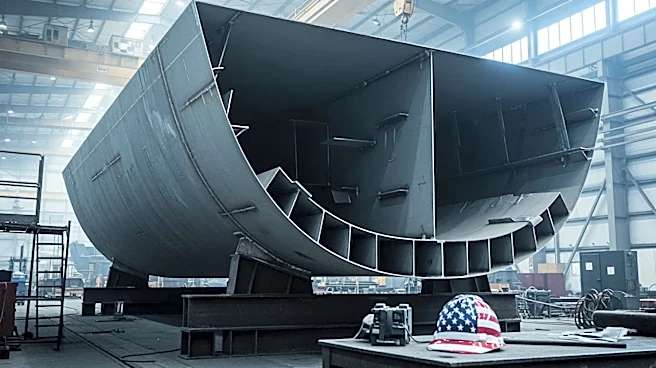
Congressional defense committees are working to limit the ability of the executive branch to utilize foreign shipyards for constructing U.S. Navy vessels. This initiative comes in response to the Trump administration's proposal to engage overseas shipyards for building
naval combatant ships. The Senate Armed Services Committee has included provisions in the Fiscal Year 2027 defense policy bill to restrict the president's authority to approve such foreign construction under the guise of 'national security interest.' The bill allows for the construction of no more than two vessels per class in allied foreign shipyards, specifically for bulk fuel vessels and roll-on/roll-off ships. The defense secretary must provide evidence that such construction is in the national security interests of the United States. Additional requirements mandate that critical mission systems and secure communications be installed in the U.S. or a secure allied facility.
Why It's Important?
This legislative move is significant as it reflects a shift towards prioritizing domestic shipbuilding capabilities and reducing reliance on foreign shipyards. By imposing these restrictions, Congress aims to ensure that critical defense infrastructure remains under U.S. control, potentially safeguarding against security risks associated with foreign construction. The decision also aligns with broader efforts to bolster the U.S. shipbuilding industry, which could lead to increased domestic employment and economic benefits. Furthermore, the initiative underscores the ongoing debate over the balance between leveraging international partnerships and maintaining national security autonomy.
What's Next?
If the proposed restrictions are enacted, the Department of Defense will need to adjust its shipbuilding strategies to comply with the new regulations. This may involve increased investment in domestic shipyards and infrastructure to meet the Navy's fleet expansion goals. The Pentagon will also be required to submit detailed reports to Congress within 30 days of any foreign construction agreements, ensuring transparency and accountability. The outcome of this legislative effort could influence future defense policy and procurement strategies, potentially impacting U.S. relations with allied nations involved in shipbuilding collaborations.