






What's Happening?
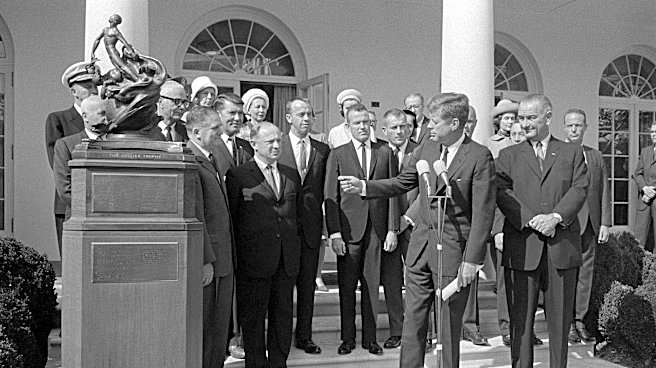
A new book, "Kennedy's Only Hero," explores how President John F. Kennedy's profound admiration for Winston Churchill significantly influenced his life, transformed his political ideology, and ultimately contributed to his ascent to the presidency. Kennedy reportedly
discovered Churchill's writings as a teenager and became a staunch believer in his brilliance by his early twenties. Under Churchill's influence, Kennedy abandoned his youthful isolationist views and adopted a more engaged approach to national and international politics. The book, drawing on previously unpublished archival material, details how Churchill's career, policies, writings, and even daily habits profoundly shaped the future president. Despite meeting late in their lives, Churchill's impact on Kennedy's campaign strategies, speeches, and overall worldview was substantial, particularly in shaping Kennedy's convictions regarding peace through strength, the importance of summits, effective rhetoric, and a deep commitment to global engagement.
Why It's Important?
This revelation is important as it sheds new light on the intellectual and ideological foundations of President John F. Kennedy's political philosophy. Understanding the profound influence of Winston Churchill on Kennedy provides crucial context for his policy decisions, leadership style, and approach to international relations during his presidency. It suggests that Kennedy's commitment to concepts like 'peace through strength' and global engagement were not solely original ideas but were significantly shaped by a revered historical figure. This insight can alter how historians and the public perceive Kennedy's legacy, highlighting the intellectual lineage of his political thought. It also underscores the enduring impact that historical figures and their ideas can have on subsequent generations of leaders, demonstrating how personal intellectual journeys can translate into national and international policy.
Beyond the Headlines
The story of Kennedy's admiration for Churchill extends beyond a simple biographical detail; it illustrates the complex interplay between personal intellectual development and political leadership. It highlights how leaders often draw inspiration and guidance from historical figures, integrating past wisdom into contemporary challenges. This narrative also subtly critiques the notion of purely original political thought, suggesting that even iconic leaders are products of intellectual traditions and influences. Furthermore, it underscores the power of rhetoric and historical narratives in shaping political personas and national policy. The book's exploration of this relationship invites a deeper consideration of how historical figures continue to exert influence across generations, shaping not only individual leaders but also the broader trajectory of national and international affairs.