
What's Happening?
The U.S. Helsinki Commission, officially known as the Commission on Security and Cooperation in Europe, is scheduled to hold a briefing on November 16 to examine Ukraine's wartime education system. This briefing comes in response to increasing evidence
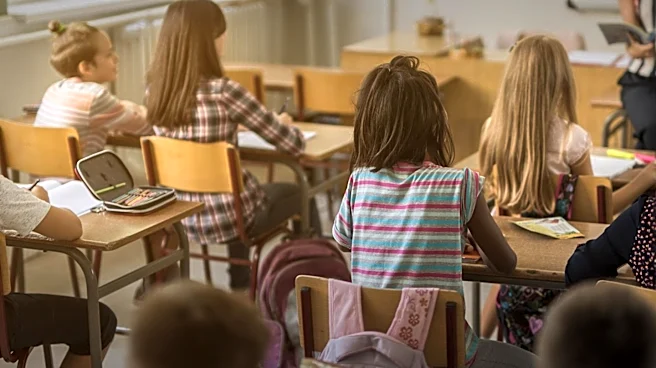
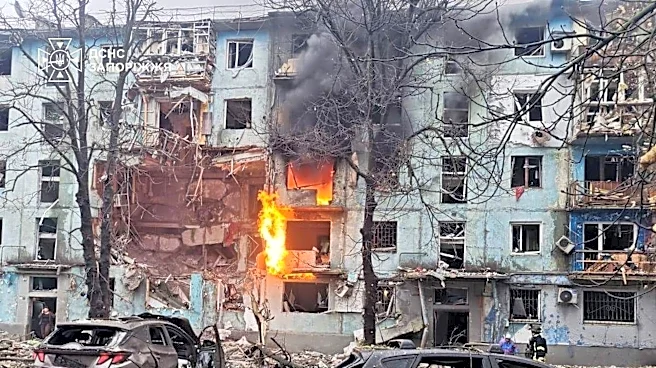
of Russian attacks on educational facilities and widespread disruptions to schooling in Ukraine. UNICEF reported that air-raid alarms affected 65.9% of school days in Ukraine during September and October, a significant increase from 37.4% during the same period last year. Since the full-scale invasion began, the United Nations has verified nearly 2,000 attacks on educational facilities, with approximately 270 occurring this year. A recent incident on November 2 involved a Russian airstrike hitting a school in Komyshuvakha, Zaporizhzhia region, which was being used to distribute humanitarian aid, resulting in civilian casualties and missing persons. The briefing will explore how Ukraine is managing to educate its students during the conflict, including efforts by volunteers and students to address educational gaps and prepare young people for future employment.
Why It's Important?
The U.S. Helsinki Commission's focus on Ukraine's wartime education highlights the profound and long-term impact of the conflict on the country's human capital and future. Education is a fundamental right and a cornerstone of societal development, and its disruption can have cascading effects on a generation of students. The documented attacks on schools not only represent a violation of international humanitarian law but also inflict psychological trauma and hinder the intellectual growth of Ukrainian youth. By examining these challenges, the U.S. Congress, through the Helsinki Commission, can better understand the needs of Ukraine and potentially inform future U.S. policy and aid initiatives. This includes assessing the effectiveness of current support mechanisms and identifying areas where additional assistance, such as educational resources, infrastructure rebuilding, or psychological support for students and educators, is most needed. The briefing underscores the U.S. commitment to human rights and the well-being of civilians in conflict zones.
What's Next?
The November 16 briefing by the U.S. Helsinki Commission will serve as a platform for gathering information and expert testimonies on the state of education in wartime Ukraine. Following the briefing, the commission may issue recommendations or reports that could influence U.S. foreign policy and aid packages directed towards Ukraine. These recommendations could include increased funding for educational programs, support for rebuilding damaged school infrastructure, or initiatives to provide remote learning resources. The bipartisan nature of the commission, with members from both chambers of Congress and the executive branch, suggests that any resulting policy proposals could garner broad support. Furthermore, the findings from this briefing could raise international awareness about the plight of Ukrainian students and potentially galvanize further international humanitarian efforts to protect educational institutions and ensure continuity of learning during the conflict.
Beyond the Headlines
The focus on Ukraine's wartime education extends beyond immediate humanitarian concerns to touch upon deeper ethical and strategic implications. The deliberate targeting of educational facilities, as documented by the UN, constitutes a war crime and reflects a broader strategy to undermine the future of a nation by disrupting its youth's development. This has long-term consequences for Ukraine's recovery and its ability to rebuild a skilled workforce and a cohesive society. The resilience shown by Ukrainian volunteers and students in continuing education amidst such adversity also highlights the enduring human spirit and the critical role of education in maintaining hope and normalcy during conflict. The U.S. engagement through the Helsinki Commission not only provides material support but also sends a strong message of solidarity, reinforcing the idea that education and human development are paramount, even in the darkest times of war. This also sets a precedent for how international bodies can address the educational crisis in other conflict-affected regions globally.