

What's Happening?
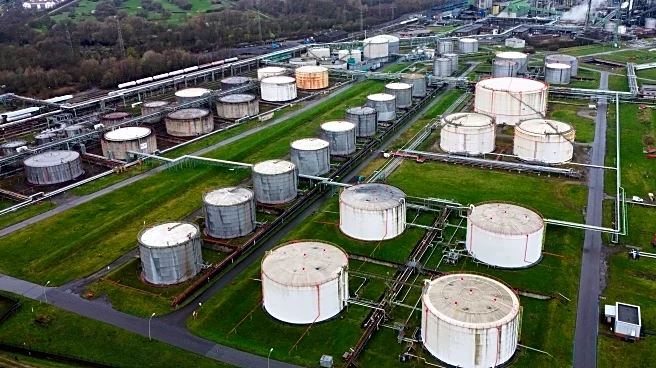
The International Energy Agency (IEA) has announced a historic release of 400 million barrels of oil from its strategic reserves in response to severe disruptions in the global oil market caused by the ongoing conflict in Iran. This decision, made by IEA member
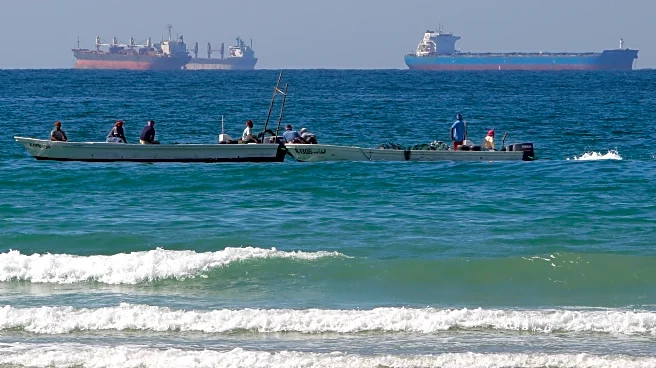
nations, aims to mitigate the impact of Iran's closure of the Strait of Hormuz, a critical passage for global oil and liquefied natural gas shipments. The closure has led to significant volatility in oil prices, which have fluctuated dramatically, reaching nearly $120 a barrel before stabilizing around $90. The IEA's action marks the largest coordinated release of oil in its history, intended to stabilize markets and ensure continued supply. However, the IEA acknowledges that this measure alone cannot fully compensate for the disruption, emphasizing the need for the resumption of transit through the Strait of Hormuz.
Why It's Important?
The release of oil reserves by the IEA is a critical step in addressing the global energy crisis exacerbated by the conflict in Iran. The Strait of Hormuz is a vital artery for the world's oil supply, and its closure has far-reaching implications for energy markets and economies worldwide. The IEA's intervention highlights the vulnerability of global energy infrastructure to geopolitical tensions and underscores the importance of strategic reserves in maintaining market stability. This move is particularly significant for oil-consuming nations, including the United States, which rely on stable energy supplies for economic stability. The decision also reflects the IEA's role in protecting consumer interests and coordinating international responses to energy crises.
What's Next?
The IEA's release of oil reserves is a temporary measure, and the organization has not yet detailed the specific contributions from each member country. The focus remains on reopening the Strait of Hormuz to restore normal oil flows. Meanwhile, countries affected by the disruption, such as Iraq and Kuwait, are facing production challenges due to storage limitations. The U.S. has waived sanctions on Russian crude to alleviate market pressures, indicating a broader international effort to stabilize oil supplies. The situation remains fluid, with potential for further geopolitical developments impacting energy markets.
Beyond the Headlines
The current crisis underscores the strategic importance of the Strait of Hormuz and the potential for geopolitical conflicts to disrupt global energy supplies. It also raises questions about the long-term sustainability of relying on such critical chokepoints for energy transportation. The IEA's actions may prompt discussions on diversifying energy sources and routes to enhance resilience against similar disruptions in the future. Additionally, the situation highlights the interconnectedness of global energy markets and the need for coordinated international responses to address supply shocks.