










What's Happening?
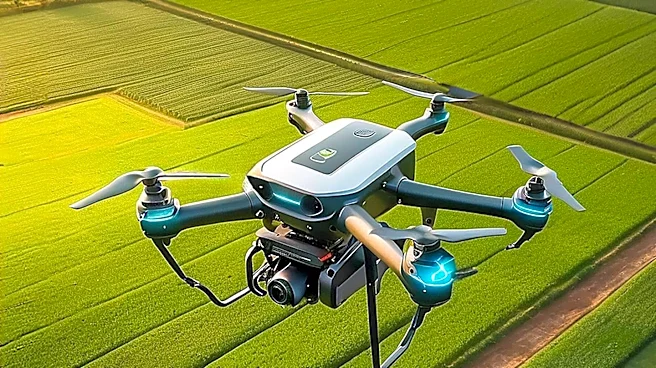
The U.S. agriculture sector is undergoing significant transformation driven by technological advancements such as precision agriculture, digital agriculture, and farm management systems. These innovations have shifted the focus from precise input application
to managing complex farming businesses through better information and decisions. The rise of cloud computing, connected machinery, and farm management information systems has facilitated this transition. However, the sector faces new challenges, including climate change, unpredictable water availability, and increasing regulatory pressures. Despite these challenges, the farming system has achieved remarkable productivity gains over the past century, enabling a single farmer to produce exponentially more food than previous generations.
Why It's Important?
The evolution of agriculture through technological innovations is crucial for addressing contemporary challenges such as climate change and resource scarcity. These advancements not only enhance productivity but also promote sustainable farming practices. The integration of technologies like IoT-based smart irrigation systems and AI-powered solutions is optimizing resource management, which is vital for maintaining long-term agricultural productivity. As the industry adapts to these changes, stakeholders including farmers, agronomists, and policymakers must collaborate to ensure that these technologies are effectively implemented to meet the growing demands for food security and environmental sustainability.
What's Next?
The future of U.S. agriculture will likely see further integration of autonomous and intelligent systems, which have the potential to create a more adaptive and resilient farming system. This transition will involve the convergence of multiple technologies, including robotics, advanced sensing, and biological innovation. As these technologies become more interconnected, they will enable new farming systems that balance productivity, profitability, resilience, and sustainability. Stakeholders will need to focus on developing technologies that solve real-world problems and fit within the existing farming systems to ensure widespread adoption and success.